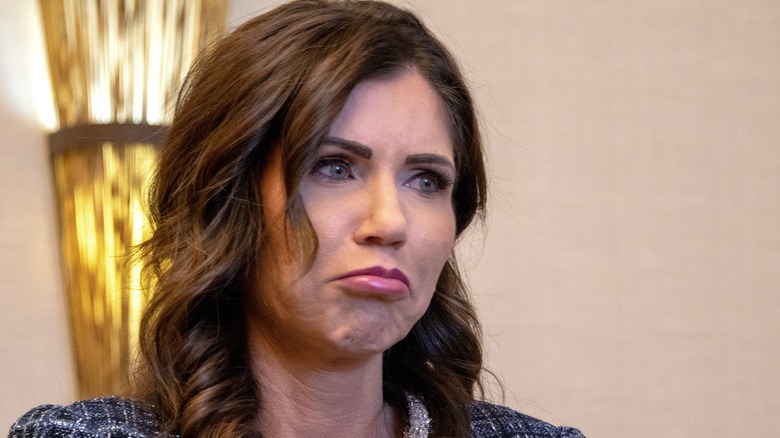
The shock didn’t build. It detonated. One confirmed move was all it took to thrust Kristi Noem into the center of a political storm that no one—supporters or critics—seemed fully prepared to contain. Conversations that once happened out loud have gone hushed. Allies whisper behind closed doors. Opponents hover closer, sensing blood in the water. And with every unanswered question, the silence itself begins to feel less accidental and more like a provocation. This moment isn’t just about strategy or ambition. It’s about loyalty under pressure, truth under strain, and how much uncertainty voters will accept before trust finally snaps.
What’s unfolding around Noem now has less to do with the specific decision that sparked the backlash and far more to do with what it has revealed about the people surrounding her. The move cut cleanly through the usual layers of spin and partisan reflex, leaving donors, advisers, and grassroots supporters facing an uncomfortable reckoning. Quietly, often privately, they are choosing sides: some rushing to defend her at all costs, others creating distance just wide enough to deny responsibility, and many opting for stillness—waiting in the shadows to see who blinks first. In a political climate already exhausted by messaging and manipulation, the growing sense that key context is being withheld feels to many like a deeper betrayal than any single mistake could ever be.
The vacuum left by that missing clarity has become its own force. Rumors rush in to fill the space. Assumptions harden into narratives. And with each passing day, control over the story slips further from her grasp. In politics, outrage can be survived. Even scandal can be weathered. But doubt—slow, corrosive, and unresolved—has a way of hollowing out support from the inside.
Now, everything hinges on what comes next. Noem stands at a crossroads where timing and tone matter as much as substance. If she steps forward with directness and uncomfortable honesty, she may still reshape suspicion into something closer to respect, even from skeptics who never intended to give her the benefit of the doubt. But if she continues to rely on ambiguity, intermediaries, and half-answers, the narrative will calcify without her input—and it will not be kind.
In the end, the most dangerous outcome isn’t a wave of anger or a burst of headlines. It’s something quieter and far more permanent: a gradual erosion of faith. And once that trust slips away, no amount of careful messaging can fully bring it back.