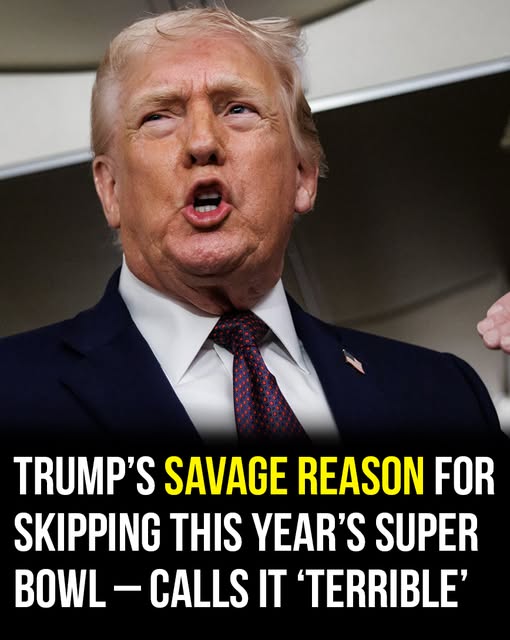
The president isn’t just skipping the Super Bowl this year—he’s making a statement. Donald Trump isn’t simply declining to attend the biggest television event in America; he’s actively turning his back on it, and he’s doing so with fury aimed squarely at the stars headlining the spectacle. In a jaw-dropping interview, Trump explained why he won’t be there, then launched a blistering attack on Bad Bunny and Green Day, accusing them of spreading “hate” and undermining the country. But that was just the beginning. What he said next about immigrants, fascism, and the millions of Americans who will tune in left political observers scrambling.
Trump’s decision to skip Super Bowl 60 is far from a casual choice. While he frames it publicly as a matter of logistics—“it’s too far away,” he says—the truth is more calculated. The real target is the event itself. With Green Day kicking off the show and Bad Bunny taking over the halftime stage, Trump has cast the Super Bowl as a cultural battleground, portraying the performers as voices of division and political hostility. “I’m anti-them,” he declared, insisting that these artists are promoting messages that attack him personally and his broader political movement.
The performers, of course, are undeterred. Bad Bunny has long used his music to challenge the president directly, imagining a world where Trump apologizes to immigrants and advocates for the very people his administration has marginalized. Green Day has made their opposition unmistakable, turning their concerts into impromptu anti-MAGA rallies, warning that the nation is “slipping into fascism” and drawing chilling parallels between Trump’s populist appeal and historic authoritarianism.
What once was a simple sports spectacle has now been transformed into another front in America’s ongoing culture war. Super Bowl Sunday is no longer just about touchdowns and halftime shows—it has become a proxy for the political fault lines that divide the country, a clash of music, ideology, and influence played out on the nation’s largest stage. And Donald Trump’s absence isn’t merely symbolic; it’s a loud, deliberate challenge to the values and voices the game’s biggest stars are bringing into living rooms across America.
As millions prepare to watch the game, one thing is clear: this Super Bowl isn’t just a game. It’s a showdown of culture, politics, and identity, and Trump’s decision to sit it out has only turned up the stakes.