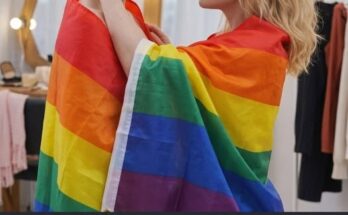
She understood, long before anyone else did, that the truth she carried could cost her everything. In an industry that sells sincerity as a promise and polices it as a rule, revealing who she really was felt like lighting a match in a room full of gasoline. Yet hiding it was slowly hollowing her out. Country music celebrated “realness,” but only within carefully drawn lines—and she lived far beyond them. As the stages grew bigger and the applause louder, the weight of pretending became unbearable. Every success tightened the knot. Every interview required another omission. Until one moment—quiet, personal, and irreversible—forced her to choose between survival and silence, not just for herself, but for countless others watching from the shadows.
Long before her name appeared on marquees or radio playlists, music was her refuge—the one place where she didn’t feel broken or out of place. In a town where tradition was treated like scripture and anything different was spoken about in lowered voices, she learned early how to edit herself. So she did what artists have always done: she turned pain into melody. She filled notebooks with lyrics no one else would read, sang truths no audience could yet hear. That private battle—between the woman the world expected and the person she actually was—followed her everywhere. It shaped her songwriting, her performances, her posture on red carpets, and the carefully practiced smiles she wore for cameras that never caught the fear trembling just beneath the surface.
Living a double life is exhausting in ways success can’t fix. Every award felt complicated. Every career milestone came with the quiet question: Would they still love me if they knew? She watched other artists rise and fall, absorbed the unspoken warnings, and waited—too long, perhaps—for the “right” moment that never truly exists. The lie wasn’t dramatic. It was daily. Subtle. Suffocating. And it demanded a payment she could no longer afford.
When she finally stepped into the light, it wasn’t with fireworks or a perfectly framed victory speech. It was messy. Painful. Public. Headlines turned sharp. Doors that once stood open closed without explanation. Some fans left, angry or confused, taking pieces of her old life with them. The cost was real, and it hurt exactly the way she had always feared it would.
But something else happened too. Letters began to arrive—from teenagers in small towns, from adults who had waited decades to hear someone like them sing without apology. Strangers wrote to say her honesty had given them language for their own lives, courage for their own truths. And her music changed. The songs grew braver. The voice grew steadier. There was a freedom in the sound that couldn’t be faked, because it wasn’t borrowed anymore—it was earned.
Her journey stands as a reminder that authenticity is not a marketing strategy or a buzzword. It is a risk. It is a loss. It is a reckoning. And sometimes, it is the only way to keep breathing. In choosing herself, she didn’t just save her own life—she gave others permission to believe that truth, even when it costs everything, is still worth the price.