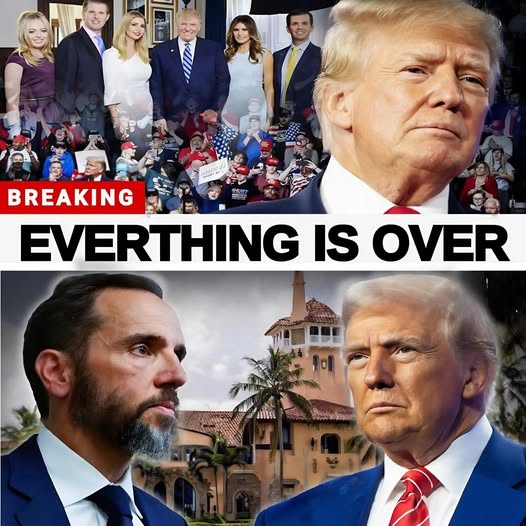
The blow didn’t come with flashing cameras or a dramatic courtroom scene. It came quietly, before dawn, in the hollow hours when Washington usually sleeps and power moves without an audience. In the dead of night, Donald Trump’s legal team launched a last-ditch, emergency effort to freeze the federal criminal case accusing him of trying to overturn the 2020 election. It was a gamble meant to stop the clock, to buy time, to throw sand into the gears of a prosecution inching closer to trial.
Hours later, the answer arrived. It was swift. It was blunt. And it was devastating.
No.
In a terse but thunderous order, the U.S. Court of Appeals for the D.C. Circuit rejected Trump’s attempt to halt the election interference case. There would be no pause, no procedural detour, no legal lifeline. The case would move forward. And the language the court chose made clear this was not just another technical ruling—it was a warning shot.
The three-judge panel acted with unusual speed, issuing a unanimous per curiam decision before most of the city had even poured its first cup of coffee. There were no oral arguments. No extended back-and-forth. No suggestion that the judges were wrestling with doubt. The court moved decisively, almost surgically, as if eager to remove any ambiguity about where it stood.
Then came the phrase that landed like a gavel strike heard across the country.
Trump’s alleged conduct after losing the 2020 election, the court wrote, was “unprecedented in our nation’s history.”
That single word—unprecedented—did heavy lifting. It reframed the entire case. This was not, the court suggested, a matter of aggressive politics, creative legal theories, or hardball electoral disputes. It was something altogether different: a rupture. A challenge to the basic mechanics of constitutional democracy itself.
By choosing that language, the judges drew a bright line between normal political conflict and what prosecutors allege Trump attempted after Election Day—pressuring officials, advancing false claims, and ultimately fueling efforts to remain in power despite defeat. The court’s words signaled that these actions, if proven, sit outside the boundaries of accepted political behavior in the United States.
For special counsel Jack Smith and his team, the ruling removes a critical roadblock. The prosecution can now press ahead, moving closer to a trial that would place a former president in the dock for actions taken while seeking to overturn an election. Time, which Trump’s lawyers have tried repeatedly to stretch and bend, suddenly feels less elastic.
For Trump, the decision is a stark reminder of a reality he has long resisted: the presidency does not confer permanent immunity. Former power does not equal present protection. The court’s refusal to intervene underscores that the legal system, at least at this stage, is unwilling to grant him special status simply because of who he once was—or who he hopes to be again.
And for the country, the ruling carries weight far beyond the fate of a single defendant. It signals that the judiciary is prepared, at least for now, to confront the unresolved trauma of January 6 and its aftermath. It suggests that courts are willing to describe the moment honestly, without euphemism or hedging, even when the subject is a former commander in chief.
The order may have been short. It may have been issued in silence, while most Americans slept. But its message was unmistakable: this case matters, this conduct is not normal, and history is watching.
As dawn broke over Washington, the legal battle Trump hoped to freeze was already moving forward again—colder, sharper, and now stamped with a phrase that will follow it all the way to trial: unprecedented in our nation’s history.