The Killing of Renee Nicole Good: A City’s Soul on Trial
Minneapolis woke up to horror.
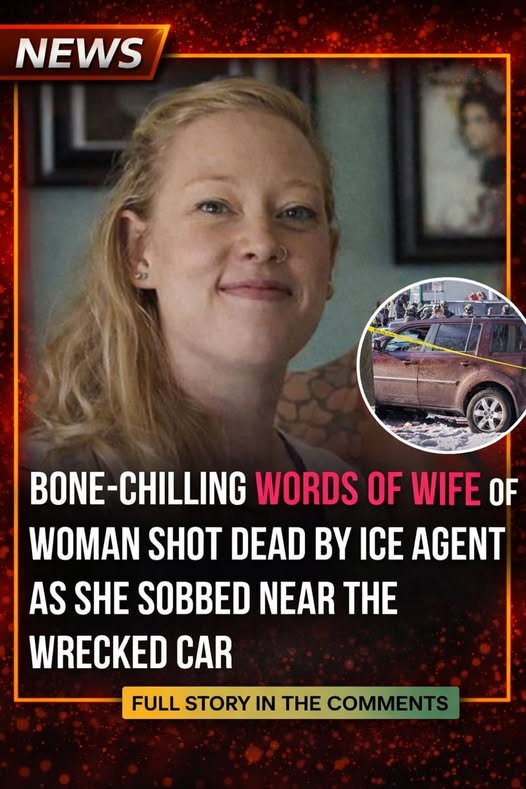
By dawn, police tape fluttered in the wind, candle flames trembled in the cold, and a familiar name — Renee Nicole Good — was on every neighbor’s lips. A poet. A mother. A woman who baked cookies for the kids next door and read bedtime stories by lamplight. Now she lay dead in the street, her blood freezing on the asphalt beside a shattered SUV.
Officials said it was self-defense. Witnesses said it was murder.
Her wife’s screams — raw, wordless, and breaking — carried through the freezing air, a sound that still haunts those who heard it. “They killed her,” one neighbor whispered, clutching her coat. “They killed her right in front of us.”
In the days since that morning, Minneapolis has become a city split in two — not just over what happened, but over what it means.
Federal officials insist an ICE agent fired to protect lives, claiming Renee had “weaponized” her car after ignoring orders to stop. They call her a domestic terror threat — a phrase that now hangs over her name like a curse. But the video tells a different story.
Shaky phone footage shows agents standing upright, uninjured, moments before the gunfire. Renee’s vehicle doesn’t speed forward — it jolts, jerks, then stops, bullet holes stitched across the windshield. The image has become a rallying cry, proof, supporters say, that Washington isn’t just wrong — it’s lying.
Mayor Jacob Frey’s voice trembled with rage as he addressed reporters. “This isn’t law enforcement,” he said. “It’s lawlessness, broadcast live for America to see. The federal government is governing by reality TV — and we’re the ones paying the price.”
But beyond the outrage, beyond the hashtags and partisan firestorms, lies a quieter story — one of unbearable loss.
Renee Nicole Good wasn’t a political symbol before the bullets found her. She was a poet who scribbled verses about morning light on the Mississippi. A musician who played guitar barefoot on her porch. A mother who packed lunches and kissed scraped knees. Her own mother called her “loving, forgiving, and affectionate — the kind of person who made you believe people were still good.”
Now her six-year-old son clutches a stuffed animal that still smells like her perfume. Her wife can’t sleep without replaying the moment she screamed her name. And her neighbors — the same ones she baked for, wrote with, laughed beside — gather in snow-covered vigils holding candles and cardboard signs.
“Her life can’t just become another contested headline,” one woman said, tears freezing on her cheeks. “She was more than a story. She was home.”
As snow falls over a city in mourning, America is left to wrestle with the same haunting question that lingers in the silence after gunfire:
When the state takes a life — and then rewrites the story — who will speak for the truth left behind?