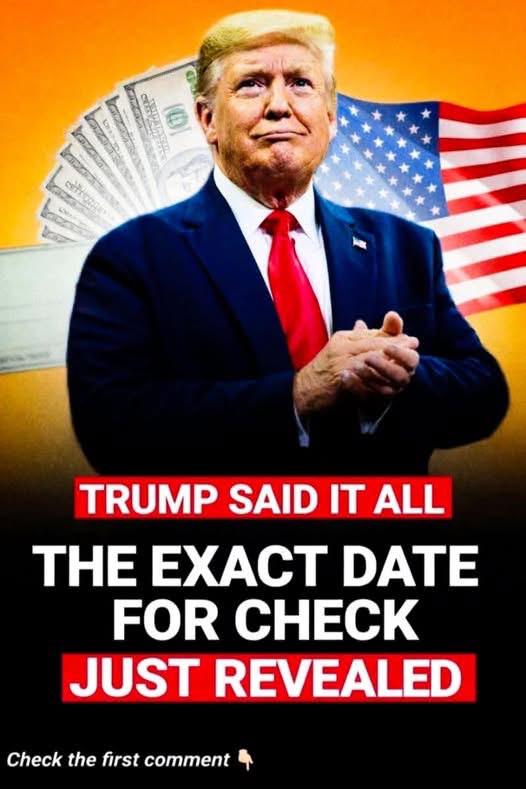
Trump’s $2,000 Promise: The Check That May Never Come
It started with a roar — a promise so bold it lit up social media within minutes. “Two thousand dollars for every working American,” Donald Trump declared, “paid for by tariffs, not taxes.” No red tape, no bureaucracy, no burden on the middle class. It sounded like economic magic — a populist dream of free money falling straight from the sky.
But beneath the glitter of the headline lies a storm of contradictions. The math doesn’t work, the law isn’t on his side, and the courts are already circling.
Trump’s much-hyped “American Dividend” plan — the latest centerpiece of his economic revival pitch — depends on a financial illusion: that tariffs are a bottomless ATM the White House can tap at will. The reality is far murkier.
The Mirage of Tariff Wealth
Since returning to the campaign trail, Trump has doubled down on the idea that tariffs on foreign goods — particularly from China — are filling U.S. coffers with billions. In his telling, that money belongs to the American people, and he plans to send it back in the form of $2,000 checks.
But economists and fiscal watchdogs are already calling it what it is: a mirage.
Tariffs don’t flow directly from Beijing to Washington’s vaults — they’re taxes on importers, many of them U.S. businesses, who often pass the cost to consumers. And despite years of Trump’s boasts about “record tariff revenues,” the numbers show something very different. The total collected so far amounts to only a fraction of what his proposal would require, and much of that sum is already tied up in legal disputes and refund claims.
The Legal Minefield
The biggest obstacle isn’t just arithmetic — it’s the Constitution.
Trump’s authority to impose many of these tariffs relied on emergency powers, a legal gray zone he invoked to bypass Congress. That maneuver is now under review by the Supreme Court. If the justices rule that Trump overstepped, it could unravel the very foundation of his plan.
Instead of mailing out $2,000 checks, Washington could face the opposite scenario: refunding billions back to importers who successfully challenge the tariffs. In other words, refunds instead of rebates, chaos instead of cash.
A senior trade attorney summed it up bluntly:
“If the Court finds the tariffs unconstitutional, there’s no dividend — only debt.”
The Congressional Reality Check
Even if the legal clouds somehow cleared, Trump’s promise still faces another immovable wall — Congress.
Any actual distribution of money would require new legislation: defining who qualifies as a “working American,” determining income thresholds, and deciding whether payments arrive as direct deposits, tax credits, or some future adjustment. Each step invites partisan warfare, fiscal scrutiny, and months — if not years — of delay.
Lawmakers on both sides of the aisle are already split. Fiscal conservatives warn that the plan risks exploding the deficit, while progressives call it a cynical election-year gimmick designed to buy goodwill with borrowed money.
Déjà Vu Economics
For millions of Americans, the whole spectacle feels hauntingly familiar — another sweeping promise delivered from a podium that evaporates on contact with reality.
Like so many campaign soundbites before it, the $2,000 “tariff dividend” sells the fantasy of pain-free prosperity. No taxes. No debt. Just checks in the mail. But behind the showmanship lies the unchanging machinery of governance — courts, committees, and budgets that don’t bend to applause lines.
If the Supreme Court slams the brakes, the fallout won’t just be political; it could be economic chaos. Businesses expecting relief could face uncertainty. Consumers may see prices climb again. And voters — once more — could be left holding the promise of prosperity that never arrives.
For now, what Americans actually hold isn’t a check — it’s déjà vu: another glittering pledge of free money, floating just out of reach, waiting to collide with math, law, and the limits of power.