We’ve all been there — that split second of uncertainty as you roll up to the gas pump. You slow down, glance at the side mirrors, hesitate. Left side? Right side? You make your best guess, swing the wheel, and then — humiliation. The hose doesn’t reach. You picked wrong.
Now you’re doing the slow, awkward shuffle of shame: backing up, readjusting, pretending not to notice the driver behind you drumming their fingers on the steering wheel. It’s one of those small, universal human moments — a mix of panic, embarrassment, and the faint realization that you should have known better.
But here’s the twist: you could have.
Because the answer was glowing on your dashboard the entire time.
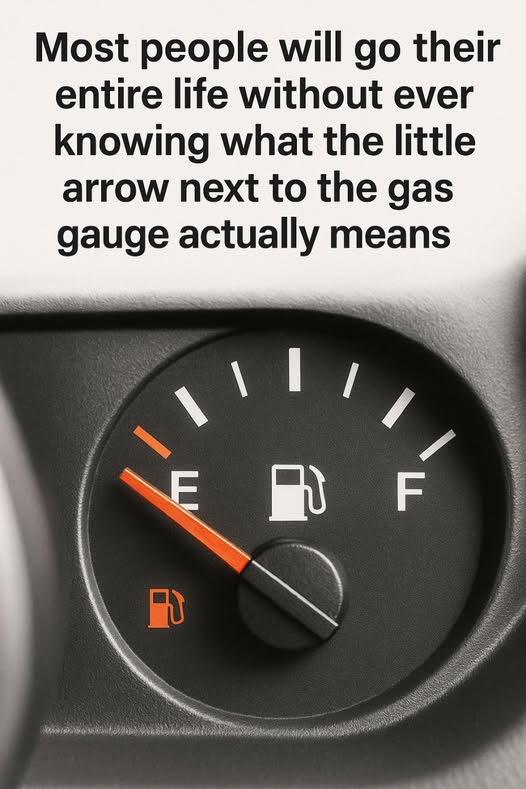
Next to your fuel gauge, there’s a tiny triangle or arrow — so subtle you might never have noticed it. It points to the side of your car where the fuel door sits. That’s it. That’s the whole trick. No guesswork, no reversing, no impatient glares. Just a small, silent piece of design genius that solves a problem almost every driver has faced.
This miniature arrow isn’t a modern gimmick. It’s the quiet result of decades of trial, error, and empathy. Automakers introduced it as people began swapping between different cars — rentals, company fleets, shared vehicles — where no one could remember which side the fuel cap was on. The solution wasn’t a bold label or a blinking alert; it was a whisper. A single arrow, tucked neatly beside the fuel icon, ready to save you from the most ordinary frustration.
And once you notice it, you can’t unsee it. Every dashboard you encounter will carry that little secret signal, quietly guiding you before you even stop the car. It’s one of those elegant reminders of how thoughtful design can turn an inconvenience into an invisible act of kindness.
The beauty of that arrow lies in what it represents: attention to the human experience. It’s part of a whole language of subtle dashboard cues — the snowflake that warns of ice, the green leaf that celebrates efficient driving, the soft glow of an alert meant to inform, not scold. These aren’t flashy features; they’re quiet guardians, designed to help us feel just a little less lost in the everyday chaos of driving.
Next time you pull into a gas station, pause before you guess. Look down. That tiny arrow beside the fuel gauge isn’t just pointing to your gas tank. It’s pointing to something deeper — a truth about how small details, when done right, can erase entire categories of stress.
Sometimes, the smartest solutions don’t shout for your attention.
They wait patiently, right in front of you, until you finally look close enough to see them.