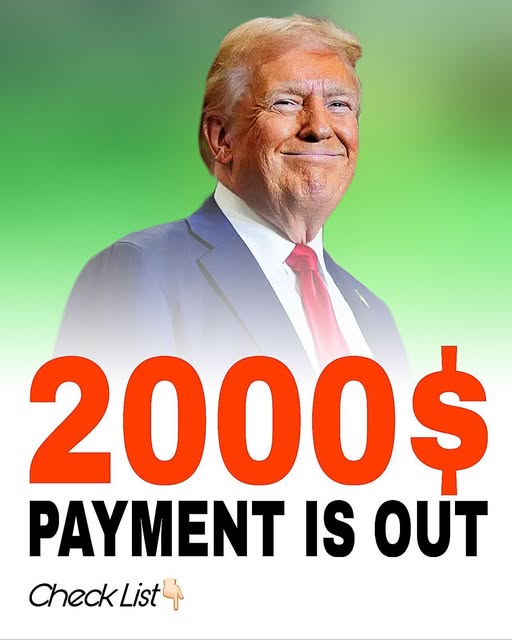
Donald Trump’s latest economic proposal strikes a chord in a way that goes beyond politics — it taps directly into a deep, bipartisan exhaustion that many Americans feel every single day. People are tired of endless discussions about GDP growth, inflation percentages, and macroeconomic indicators that feel abstract and distant. Meanwhile, rent, groceries, and medical bills continue to pile up, quietly crushing families who live paycheck to paycheck. In this context, Trump’s strategy to promise a specific dollar amount on a specific date cuts through the noise. It feels immediate, personal, and tangible. For millions, it’s the first time in a long time that someone in the political arena seems to understand the urgency of their daily struggles. It’s actionable, relatable, and hopeful — the kind of clarity that resonates in households where every cent counts.
Yet beneath that emotional resonance lies a knot of complexity. The mechanism Trump touts — funding these direct checks through tariffs on trade — quickly turns emotional clarity into economic controversy. Tariffs are rarely a neutral tool; in most cases, they are passed along to consumers in the form of higher prices for goods and essentials. In other words, the same families who might receive relief from a check could also end up paying more at the grocery store or in retail purchases, undercutting the simplicity of the promise.
This tension exposes a raw national divide. On one side, there is the desperate simplicity of “just send the money” — a visceral, emotional reaction to financial strain that ignores the economic mechanics behind it. On the other, there is the harsh, often unpopular reality of who ultimately bears the cost when bold promises are enacted. It’s a paradox that turns straightforward generosity into a politically and economically charged debate.
Trump’s framing is masterful from a communication standpoint: it speaks directly to the frustrations of everyday Americans, giving them the illusion of immediate relief and recognition. Yet the method he proposes reminds the public that real-world economics rarely aligns with political optics. It’s a moment where hope collides with consequence, and where the simplicity of a promise — wrapped in the warmth of holiday timing — meets the complexity of who truly pays the price.
Ultimately, the plan reflects both the power and the peril of populist economic messaging: it can mobilize hope and energy among those struggling, but it also magnifies the contradictions and trade-offs inherent in translating that hope into policy. It’s a test of whether emotion can outpace economics — or whether reality will inevitably catch up, leaving families, politicians, and markets to reconcile the gap.