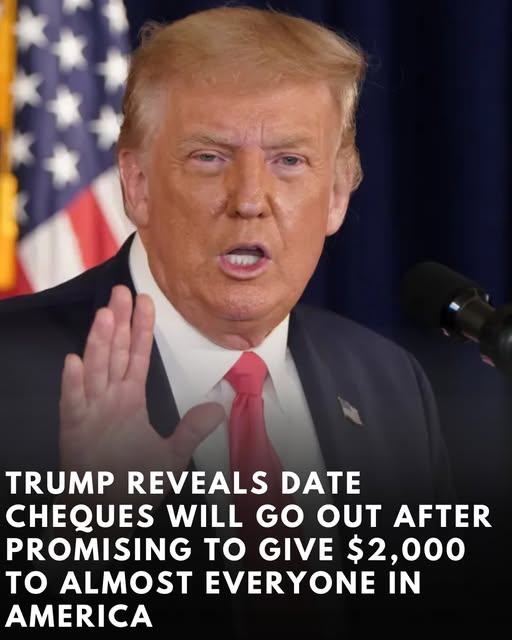
Trump Says the Money Is Coming — But the Clock, the Courts, and the Math Tell Another Story
Donald Trump says help is on the way. Every American, he promises, will receive a $2,000 “tariff dividend” — a payout funded not by new taxes or debt, but by America’s economic resurgence and a flood of tariff dollars from foreign competitors. It’s a headline-ready promise: a simple check, a booming economy, and a president who says he’s found a way to make global trade pay you back.
But beyond the triumphant rally soundbites and social media posts, the fine print begins to blur. The math stumbles. The law complicates. And the promise that once felt like a check in the mail is now tangled in courtrooms, congressional committees, and the cold arithmetic of federal budgets. What began as a political masterstroke now teeters between vision and vapor.
Inside Washington, the plan is still a sketch on a napkin. Officials quietly admit they don’t yet know who qualifies, how often payments would be made, or whether Americans would even receive them as direct cash at all. Early drafts from the Treasury hint at income caps around $100,000 and the possible use of tax credits instead of checks — a move that could shrink the number of beneficiaries dramatically. Even those outlines, however, rely on one major assumption: that tariff revenue will be large enough to pay the bill.
Independent economists aren’t so sure. They warn that the numbers simply don’t add up — that tariffs, far from generating excess funds, often raise prices at home and slow consumer spending. The “dividend,” they argue, might ultimately come out of Americans’ own pockets.
And looming above it all is a growing legal storm. A significant portion of the money Trump wants to redirect depends on tariffs imposed under emergency executive powers — powers that are now being challenged before the Supreme Court. If those rulings go against him, instead of funneling billions toward citizens, the government could be forced to refund those very tariffs to importers.
In other words, the “tariff dividend” could turn from a populist windfall into a legal liability.
As 2026 approaches, the distance between promise and payout widens. Congress must authorize parts of the plan. The courts could dismantle its funding source. And voters — many of whom are already counting on that $2,000 — are growing impatient.
Trump’s $2,000 pledge remains one of the most attention-grabbing promises of his campaign — a symbol of direct, tangible relief in an era of political noise. But beneath the confident slogans lies a fragile equation, one held together by optimism, legal gambits, and political timing.
For now, the checks are still hypothetical. The slogan still sells. And the promise of a “tariff dividend” sits suspended between campaign fantasy and fiscal fact — waiting for a verdict from both the law and the ledger.