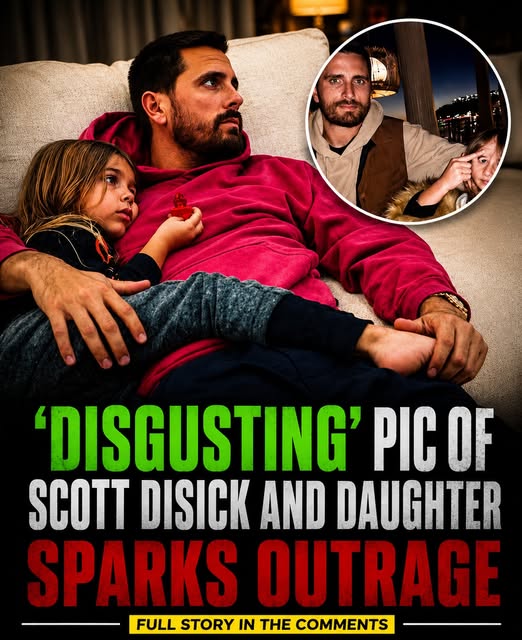
One photo was all it took to ignite the internet.
What began as an ordinary celebrity snapshot quickly spiraled into one of the most heated online debates of the week. In the image, Scott Disick beams casually at the camera while seated beside his daughter, Penelope, at what appears to be an Asian restaurant. Chopsticks rest on the table, the atmosphere seems playful—and yet one small gesture changed everything. Penelope pulls at the corners of her eyes, making a face that millions of viewers immediately recognized not as harmless silliness, but as a painful racial stereotype with a long and ugly history.
Within hours, social media exploded.
Words like “racist,” “tone-deaf,” “ignorant,” and “bad parenting” flooded comment sections across Instagram, TikTok, and X. Critics condemned the image as offensive and deeply insensitive, arguing that even if no harm was intended, the gesture echoed the “slant-eye” mockery East Asian people have endured for generations. Others questioned how a family living in unimaginable wealth and privilege could still appear so unaware of the cultural impact behind such actions. Some blamed Scott for posting the photo. Others pointed fingers at Kourtney Kardashian, accusing both parents of failing to teach cultural awareness and respect.
But not everyone agreed.
A wave of defenders rushed to Penelope’s side, insisting she is simply a child making a goofy expression without understanding the history attached to it. Supporters argued that the backlash had gone too far, calling the outrage unfair and excessive toward a young girl who likely had no malicious intent. To them, the internet had once again transformed an innocent family moment into a full-scale public trial.
Yet the controversy revealed something much larger than one celebrity photo.
For many East Asian viewers, the image reopened old wounds tied to years of ridicule, bullying, and casual racism disguised as “jokes.” The slant-eye gesture is not new; it has appeared for decades in playground taunts, movies, memes, and social interactions that reduced Asian identity to a caricature. What some dismiss as harmless fun carries a very different emotional weight for those who have lived through the humiliation behind it.
And that is where the conversation became far more complicated.
Because intent and impact are not always the same thing.
A person may not mean to offend, yet still contribute to harmful stereotypes. A child may not fully understand a gesture, but adults around them are still responsible for guiding, teaching, and correcting. The internet’s reaction was not only about Penelope’s expression—it was about the broader frustration over how casually racial stereotypes continue to surface in modern culture, even in spaces shaped by influence, fame, and enormous public visibility.
In many ways, the backlash became less about punishment and more about accountability.
Critics argued that celebrities, especially those with millions of followers, hold extraordinary influence over public behavior and social norms. A single image posted online can normalize actions for countless viewers, especially young audiences who may imitate what they see without understanding the deeper implications. What might once have stayed a private family moment now becomes global discourse within minutes, dissected by millions across every platform imaginable.
The controversy also exposed the impossible reality of parenting in the social media age. Every smile, joke, mistake, or misunderstood moment can instantly become international news. Families are no longer judged privately—they are judged publicly, permanently, and often mercilessly. Celebrity children grow up under a microscope where even childish behavior can trigger worldwide outrage.
Still, beneath the anger, debates, and endless comment wars lies an uncomfortable truth: moments like this show how quickly old stereotypes can reappear when society assumes they no longer matter.
One photo. One expression. One viral upload.
And suddenly the internet found itself confronting larger questions about race, privilege, parenting, accountability, and the hidden power of images in a digital world where nothing stays “just a joke” for long.