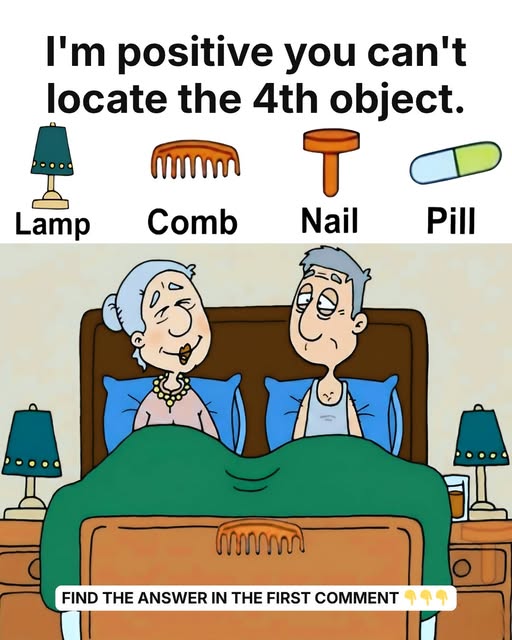
Most people are convinced they’ve cracked it within seconds. They lean closer to the screen, zoom in, narrow their eyes, and proudly point out every hidden object they think they’ve discovered. For a moment, confidence takes over. The lamp? Easy. The comb? Found it. The nail? Tricky, but manageable. And yet, something still feels incomplete. One object remains invisible no matter how many times they search the same cozy bedroom scene. Frustration slowly creeps in as their eyes travel across every corner again and again, desperately trying to spot what’s missing.
But the truth is far more fascinating than simply “not seeing carefully enough.” Your eyesight isn’t failing you at all. Your brain is.
The human mind was never designed to absorb every tiny detail like a camera. Instead, it works more like a storyteller. It quickly builds a version of reality based on assumptions, expectations, and familiar patterns. Once your brain decides it understands what it’s looking at, it stops searching. It fills in the blanks automatically, convincing you that you’ve already seen the whole picture — even when an important detail is hiding in plain sight. That’s exactly why this puzzle feels so strangely unsettling.
At first, the hidden objects seem like nothing more than a fun visual challenge. The lamp blends naturally into the room. The comb hides among ordinary shapes. The nail disappears into the chaos of tiny details. But then comes the pill hidden inside the old woman’s mouth — the object that completely changes the experience. Suddenly, the puzzle stops being about observation and starts becoming a lesson about perception itself. It exposes a deeper truth most people never think about: we don’t actually see the world as it is. We see what our minds expect to see.
And that realization lingers long after the puzzle is solved.
That’s why these hidden-object illusions stay trapped in your thoughts for hours, sometimes even days. They quietly force you to question how much you overlook in everyday life. How many subtle facial expressions have you missed during conversations? How many silent emotions have gone unnoticed behind someone’s smile? How many important clues have blended into the background simply because your brain labeled them as unimportant?
Every hidden object in this puzzle becomes more than just a game. It becomes a reminder. A reminder to slow down. To look twice instead of once. To challenge your first impression rather than trust it blindly. Because sometimes the smallest, quietest detail is the one that changes everything — and often, it’s the very detail your mind chose to erase before you even realized it was there.