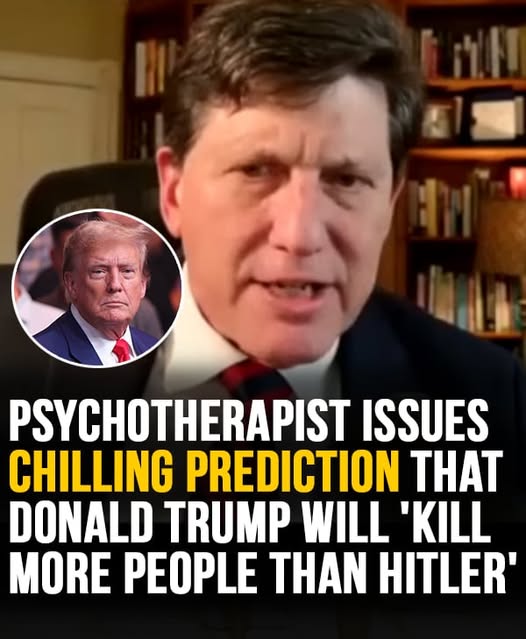
The warning is explosive — and deeply unsettling. A prominent psychotherapist is now sounding the alarm that Donald Trump may be far more dangerous than critics ever imagined. According to Dr. John Gartner, Trump is not merely unfit for office; he is allegedly showing signs of severe psychological decline while wielding the most powerful military machine on Earth. Gartner’s stark accusation is chilling: Trump is “losing his mind,” consumed by delusions of grandeur, and increasingly portraying himself as a figure greater than ordinary leaders — even comparing himself to icons such as Jesus Christ, Julius Caesar, Napoleon Bonaparte, and Alexander the Great.
What makes the warning so disturbing is not just the rhetoric itself, but the immense power attached to it. Gartner argues that a dangerous combination of alleged dementia, narcissism, and unchecked grandiosity could become catastrophic when paired with control over the U.S. nuclear arsenal and military command structure. In his view, the threat is not theoretical — it is potentially global in scale.
Dr. Gartner, founder of the mental health advocacy group “Duty To Warn,” has stepped directly into one of the most volatile political debates in modern America. Drawing from Trump’s speeches, late-night social media posts, public behavior, and increasingly dramatic self-comparisons, Gartner claims these are not isolated examples of ego or political theater. Instead, he believes they may point to a deeper psychological deterioration unfolding in real time before the world’s eyes.
His most controversial statement has sent shockwaves across political and media circles: Gartner warned that Trump could become “more dangerous than Hitler” and potentially “kill more people than any dictator in history” if instability and absolute power collide. While he openly acknowledges this is not a formal clinical diagnosis, he insists it is an urgent public warning rooted in what he sees as observable behavioral patterns.
The comments have ignited fierce backlash and intense debate. Critics accuse Gartner and like-minded professionals of crossing ethical boundaries by attempting to diagnose a public figure from afar. Supporters, however, argue that mental health experts have a moral obligation to speak when they believe public safety may be at risk. The clash has exposed a growing divide between professional caution and political fear.
At the center of the controversy lies a haunting question that refuses to go away: what happens if even a fraction of these warnings are true? In an era already defined by political polarization, global conflict, and rising instability, the idea of a psychologically deteriorating leader controlling nuclear weapons is a scenario many Americans find impossible to ignore.
Whether viewed as a courageous warning or an outrageous overreach, Gartner’s claims have intensified concerns about leadership, power, and the fragile line between political spectacle and genuine danger. And as the 2026 political climate grows more heated, the debate over Trump’s mental fitness is no longer confined to partisan attacks — it has evolved into a deeply emotional and existential argument about the future of American democracy and global security.