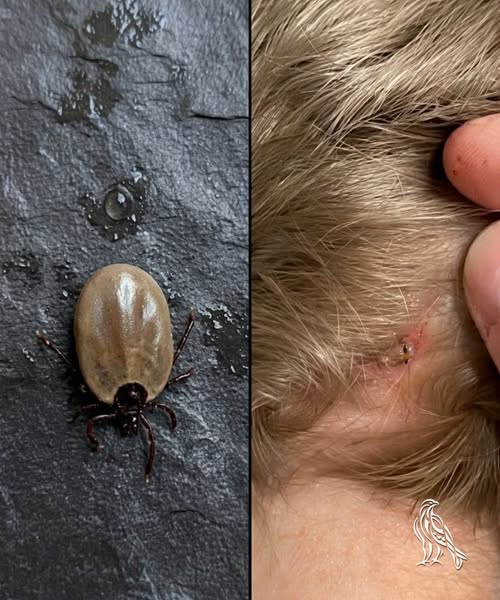
Ticks don’t just bite — they infiltrate. Silent, patient, and almost invisible, these tiny parasites can cling to your skin for hours or even days without being noticed. While you continue your hike, enjoy your backyard, or return home from a camping trip, a tick may already be feeding beneath the surface, slowly drawing blood and potentially delivering dangerous bacteria, parasites, or viruses directly into your bloodstream. What begins as a nearly invisible bite can quickly become something far more serious than a minor irritation.
The frightening part is how quietly it can happen. Many people never feel the bite at all. There is often no immediate pain, no dramatic warning sign, and no reason to suspect anything is wrong. Yet during that unnoticed window, infections such as Lyme disease and other tick-borne illnesses can begin spreading through the body. By the time symptoms appear — unusual fatigue, headaches, fever, muscle aches, chills, or a spreading rash — the infection may already be taking hold. For some, those early symptoms are mild and easy to dismiss, mistaken for stress, exhaustion, or the flu. But ignoring them can allow the illness to progress, sometimes leading to long-term complications affecting the joints, nervous system, heart, and overall health.
Ticks may be small enough to fit on a fingertip, but their impact can be life-altering. A single bite has the potential to change weeks, months, or even years of someone’s life. That is why awareness matters so much. Paying attention to subtle changes in your body after spending time outdoors can make all the difference. Persistent tiredness, dizziness, body aches, swollen lymph nodes, or unusual skin irritation should never be brushed aside after possible tick exposure. Early detection is critical because many tick-borne diseases can be treated successfully when caught in time, greatly reducing the risk of severe or lasting health problems.
Protection starts long before a tick ever reaches your skin. Wearing long sleeves and protective clothing, using effective tick repellents, avoiding heavily wooded or grassy areas when possible, and performing thorough full-body checks after outdoor activities are some of the best defenses. Ticks often hide in hard-to-see places like behind the knees, around the waist, under the arms, along the scalp, or behind the ears. Even pets can unknowingly carry them into the home, increasing the risk of exposure for the entire family.
If you do find a tick attached to your body, acting quickly and carefully is essential. Using fine-tipped tweezers to remove the tick properly, cleaning the bite area thoroughly, and monitoring your health over the following days and weeks can help prevent complications. Taking a photo of the rash or noting when symptoms begin may also help healthcare providers identify potential infections early. And if something feels unusual afterward — whether it is unexplained exhaustion, fever, joint pain, or simply a sense that your body is not functioning normally — seeking medical advice immediately is not overreacting. It is a smart and responsible step that could protect your long-term health.
Nature is beautiful, but it also carries hidden dangers that should never be underestimated. Ticks are among the smallest threats outdoors, yet they can leave some of the biggest consequences. Staying informed, staying alert, and responding quickly after exposure can mean the difference between a simple recovery and a serious medical battle.