Hospitals are often imagined as cold, sterile places filled only with beeping machines, hurried footsteps, and serious faces under harsh fluorescent lights. But that perception only tells part of the story. Behind the closed doors of wards and corridors, something far more human is constantly unfolding—quiet moments of kindness, unspoken understanding between colleagues, shared laughter that breaks through exhaustion, and small but meaningful gestures that help people keep going through the longest and most demanding shifts.
In these spaces, even the simplest interaction can carry surprising weight. A brief smile exchanged between a doctor and a nurse during a hectic night shift can shift the emotional temperature of an entire room. It can reset fatigue into focus, tension into teamwork, and pressure into shared purpose. In a place where every second can matter, these micro-moments of connection become a kind of invisible medicine of their own.
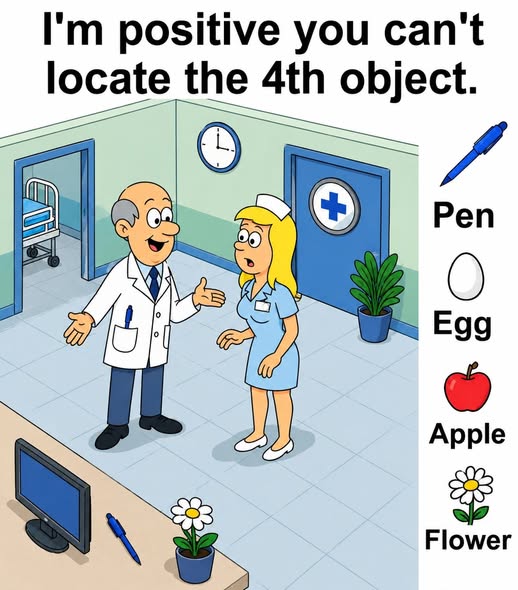
The illustrated hospital scene captures this hidden layer of healthcare with remarkable sensitivity. Every detail feels intentional, quietly honoring the individuals who hold the system together when it is at its most demanding. The doctor, for example, is portrayed with an animated, approachable expression—someone who has clearly delivered difficult news and celebrated hopeful recoveries, yet still chooses to remain warm and present. His crisp white coat and neatly arranged tie reflect professionalism and authority, but it is his posture—slightly leaned forward, engaged and open—that reveals something deeper: a willingness to truly listen, not just instruct.
Beside him, the nurse stands with calm steadiness, her attentive gaze reflecting the kind of unwavering focus that patients rely on without even realizing it. She embodies that quiet strength so often found in nursing staff—the ability to remain composed under pressure, to notice the smallest changes in a patient’s condition, and to offer reassurance without always needing words. Together, the two figures represent a partnership built on trust, experience, and shared responsibility.
Surrounding them, subtle visual elements soften the clinical environment into something more grounded and human. A neatly made hospital bed suggests readiness and care, while medical symbols hint at the constant presence of science and precision. Yet it is the unexpected details—a playful apple on the wall, gentle lighting, and carefully arranged surroundings—that transform the space. They remind us that even in environments defined by urgency, there is room for personality, warmth, and humanity.
Ultimately, the scene goes beyond depicting a workplace. It becomes a quiet tribute to resilience. Hospitals are not only places of treatment, but also ecosystems of emotional endurance, teamwork, and compassion. Every shift carries stories that never make it into charts or reports: moments of encouragement shared between colleagues, silent acknowledgments of exhaustion, and the collective effort to keep showing up for patients—and for each other—no matter how demanding the day has been.
This illustration gently reveals what is often unseen: that at the heart of healthcare is not just skill and procedure, but people—working together, supporting one another, and finding strength in the smallest acts of kindness that keep everything moving forward.