A woman recently moved into what she believed was her absolute dream home—fresh paint, warm light through the windows, and that quiet sense of “this is finally mine.” Everything felt perfect… until the day she leaned under the kitchen cabinet and noticed something that made her freeze.
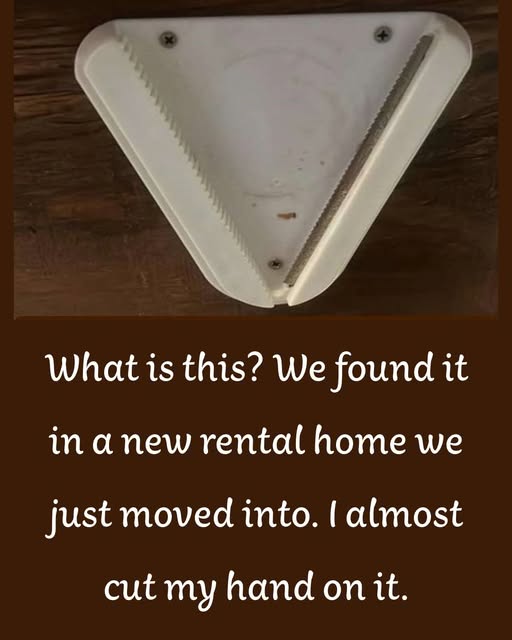
Hidden in the shadowed underside of the wood was a jagged metal circle. Cold. Fixed in place. Its edge was lined with strange, tooth-like ridges, almost like something mechanical had bitten into the cabinet and never let go.
For a moment, her imagination ran wild.
A trap? A hidden security device? A leftover piece of something far more sinister—maybe even a prop from a horror movie that somehow never got removed?
She did what anyone would do in 2026: she took a photo and posted it online.
Within hours, the internet did what it does best—spiraled.
Thousands of guesses poured in. Some said it was surveillance equipment. Others insisted it was a pest trap or a forgotten tool from some obscure DIY system. A few joked it was “where the previous owner kept their secrets.” The mystery spread fast, and suddenly people everywhere were crouching under their own kitchen cabinets, flashlight in hand, searching for hidden metal circles they were now convinced might be lurking in their homes too.
And then came the truth.
It wasn’t sinister at all. Not a trap. Not a camera. Not anything dangerous.
It was something far more ordinary—and strangely beautiful in its simplicity.
A late-1980s under-cabinet jar opener.
Back when kitchens were built for function more than aesthetics, someone had the clever idea to solve a very human problem: stubborn, factory-sealed jar lids that refused to open no matter how hard you twisted. The solution was this small mechanical device, screwed discreetly beneath a cabinet. Out of sight. Out of the way. Always ready.
When needed, you’d simply press a jar into its jagged metal grip. The “teeth” would clamp down firmly, holding the lid in place like a tiny industrial vice. And suddenly—without strain, without slipping, without sore wrists—you could twist the jar open with almost effortless ease.
No batteries. No instructions. No updates. Just smart engineering doing exactly what it was meant to do.
What fascinated people most wasn’t just the cleverness of the design, but what it represented.
It was a reminder of a time when everyday problems were solved with durability instead of software. No notifications. No apps. No “smart home” connectivity. Just a small, inexpensive piece of metal quietly doing its job for decades without asking for attention or improvement.
In a world obsessed with upgrades and replacements, this forgotten kitchen tool felt almost radical in its simplicity. A kind of silent rebellion against planned obsolescence. A reminder that sometimes, the best solution is the one that never needed changing in the first place.
And now, when new homeowners stumble across one of these relics tucked beneath their cabinets, the reaction has changed. They don’t rush to remove it.
They pause.
They clean it. Test it. Tighten the screws.
And more often than not, they leave it right where it is—an unassuming piece of the past still quietly helping open tomorrow’s dinner.