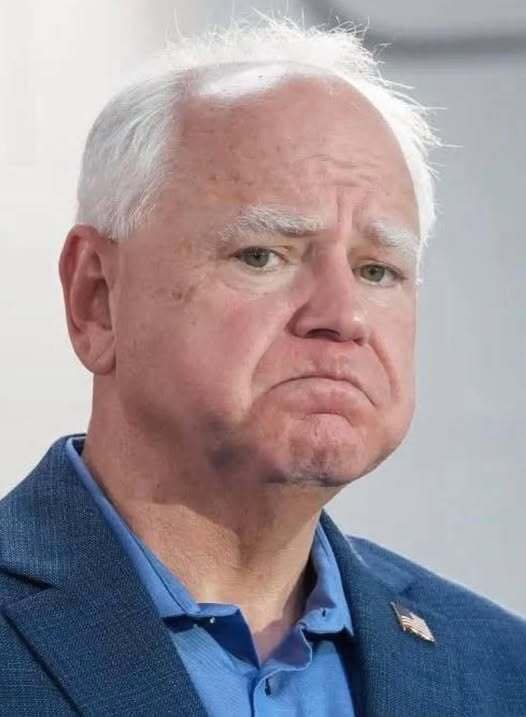
The instant the announcement echoed across the arena, the atmosphere transformed. A roar of disbelief and exhilaration surged through the crowd as supporters leapt to their feet, waving signs, embracing strangers, and lifting phones high above their heads to capture a moment already destined for history books. Television cameras swung wildly through the sea of cheering faces while commentators struggled to keep pace with the shockwaves spreading across the nation. In a single breathless moment, a state more often associated with quiet resilience and frozen winters than political spectacle found itself thrust into the blazing center of American power.
For years, the path to this moment had been built not through fiery headlines or theatrical speeches, but through persistence, patience, and an almost old-fashioned belief in public service. It had been shaped in crowded school gyms during town halls, in tense late-night negotiations at the state capitol, and around kitchen tables where working families voiced fears about healthcare, jobs, and the future of their children. Every handshake at a county fair, every visit to flood-ravaged communities, every conversation with teachers, factory workers, veterans, and union leaders had slowly constructed the foundation for this astonishing rise.
Now, standing just one heartbeat away from the presidency, the governor who once focused almost entirely on Minnesota’s challenges suddenly carried the attention — and expectations — of an entire country. Political allies celebrated the announcement as a defining turning point, arguing that it signaled a hunger for steadier leadership in an era dominated by outrage and division. Critics, however, dismissed it as a risky political gamble, questioning whether a leader known more for quiet pragmatism than national charisma could survive the brutal glare of presidential politics. Yet beyond the endless cable news debates and social media frenzy, many Minnesotans experienced the moment in a far more personal way. To them, this was not simply another politician ascending the ladder of power. This was someone they had watched walk through local schools, comfort families after disasters, stand shoulder to shoulder with workers on picket lines, and speak with a calmness that felt increasingly rare in modern politics.
Across Minnesota, celebrations carried an unmistakable sense of hometown pride. In small towns and busy city neighborhoods alike, people gathered in bars, living rooms, and community centers to watch the news unfold together. For longtime supporters, the rise felt almost surreal — proof that a leader shaped far from Washington’s elite circles could still command the national spotlight. Stories resurfaced of modest campaign stops, unscripted conversations, and years spent governing through compromise rather than confrontation. What once seemed like ordinary acts of governance were suddenly reframed as evidence of a leadership style many Americans feared had disappeared entirely.
At the heart of the growing national fascination was the governor’s reputation for calm, methodical persistence. While political culture increasingly rewarded spectacle and conflict, his career had been defined by negotiation, coalition-building, and a willingness to work quietly behind the scenes. Supporters argued that this approach represented something deeply needed in a fractured country exhausted by constant political warfare. They saw in his story the possibility of a bridge — one connecting urban progressives and rural communities, coastal power centers and overlooked Midwestern towns, ideological rivals and weary independents searching for stability.
But beneath the celebration, the confetti, and the triumphant headlines, an unavoidable question lingered in the air: could the qualities that earned trust in one state truly resonate across a divided nation? Could steady pragmatism compete against the relentless intensity of modern presidential politics? Some believed his grounded background — rooted in classrooms, farming communities, military families, and working-class neighborhoods — gave him a rare ability to speak to Americans who often felt ignored by both parties. Others wondered whether a leadership style built on patience and compromise could withstand a political climate driven by outrage, speed, and spectacle.
Regardless of how the election ultimately unfolds, one reality has already become undeniable: Minnesota has stepped into the very center of the American political map. What began as a regional success story has evolved into a national referendum on the kind of leadership voters truly want in uncertain times. The governor’s rise is no longer simply about one man’s ambition or one state’s moment of pride. It has become a larger test of whether humility, steadiness, and pragmatic governance can still capture the imagination of a country searching for direction amid noise, division, and relentless change.