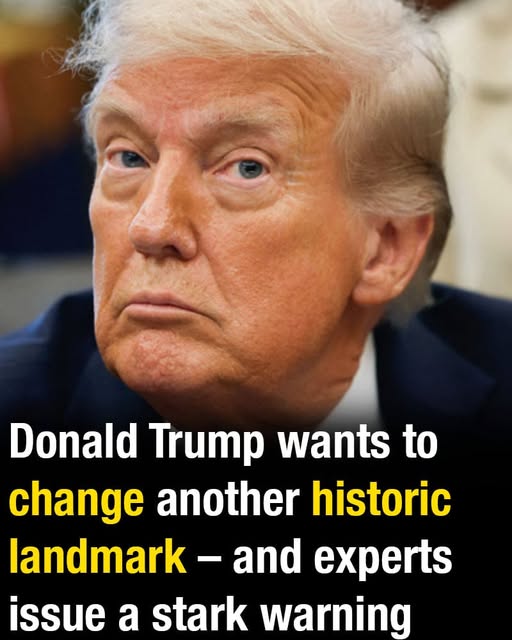
Here’s a longer, more dramatic, and more engaging rewrite of your content:
Since the first leaked sketches surfaced behind closed doors in Washington, tension has been building fast. What began as whispers about a possible renovation has exploded into a full-scale political and cultural firestorm. Donald Trump’s reported push to “beautify” one of the nation’s most recognizable government buildings is no longer just about architecture — it has become a battle over history, identity, power, and legacy.
At the center of the controversy stands the Eisenhower Executive Office Building, a towering 19th-century landmark that has witnessed wars, protests, presidential transitions, and some of the most pivotal moments in modern American history. For generations, its imposing gray granite facade has symbolized permanence and authority just steps away from the White House. But now, preservationists fear that image could be erased forever.
According to reports circulating inside Washington, Trump has pushed for the massive granite structure to be painted bright white, bringing it visually in line with the White House beside it. Supporters describe the idea as bold, patriotic, and visually powerful — a transformation they believe would project strength, unity, and a renewed national image to the world. To them, the change represents modernization and pride, a chance to give the historic building a cleaner and more commanding presence.
But critics warn the proposal could trigger irreversible damage.
Historians, architects, and preservation experts have sounded the alarm, arguing that painting over the building’s dense historic granite would not simply change its appearance — it could permanently alter and weaken the structure itself. Experts say coating granite traps moisture inside the stone, accelerating cracking, decay, and long-term deterioration. Once the surface is sealed and painted, they warn, the original material may never fully recover. For preservationists, this is not a debate about color preferences or style. It is a fight to protect a National Historic Landmark from what they see as an act of permanent disfigurement.
Behind the scenes, the conflict has become increasingly intense. Engineers, regulators, and federal preservation agencies are reportedly demanding scientific testing, environmental studies, and alternative solutions before any work can move forward. Meanwhile, political pressure continues to grow from both sides, turning what should have been a routine maintenance discussion into a symbolic struggle over who gets to shape America’s visual identity.
To critics, the deeper concern goes far beyond paint. They argue the controversy reflects a larger question haunting the country: should historic landmarks preserve the story of the past, or be reshaped to reflect the personal vision of modern political power? Supporters counter that every era leaves its mark on Washington, and that restoring grandeur is part of leadership itself.
For now, the granite walls remain untouched. The scaffolding has not gone up. The brushes have not arrived. But in Washington, the debate is already raging — not just over stone and paint, but over memory, symbolism, and who ultimately controls the image of America itself.