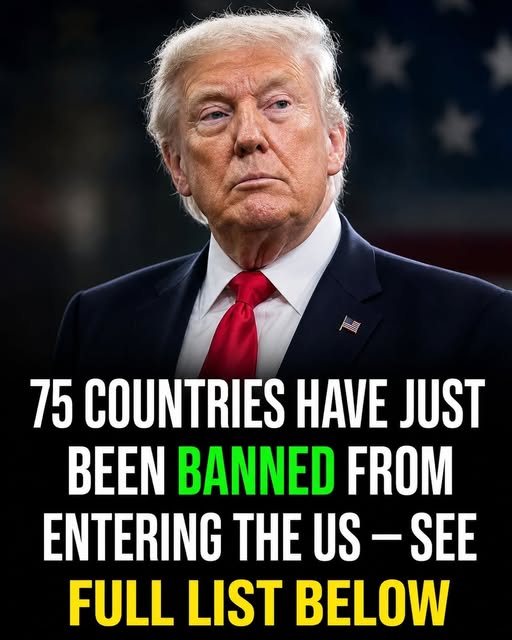
A single announcement—brief, clinical, almost routine in tone—rippled outward and fractured thousands of carefully laid plans in an instant. Across continents, lives that had been meticulously organized around departure dates and visa stamps were suddenly suspended mid-motion. Suitcases stood half-zipped. Farewell dinners turned into uncertain pauses. Families who had counted down the days to long-awaited reunions found themselves staring at an invisible barrier. Officials were quick to clarify: this was “not a ban.” Yet for those caught in its reach, the distinction felt hollow. The doors, once open, now seemed firmly bolted.
In a matter of moments, what had been a predictable immigration pathway transformed into a global cliffhanger. At consulates in Lagos and Manila, at embassies in Istanbul and Bogotá, scenes of quiet anticipation gave way to confusion and disbelief. People who had sold homes, left jobs, and pulled children out of school in preparation for a new chapter were told to wait—indefinitely. There was no clear timeline, no reassuring roadmap, only a vague promise of review. The official language remained detached and procedural: a “temporary pause” for security checks and financial scrutiny. But beyond the paperwork, the human toll told a far more emotional story.
Weddings have been postponed with no new date in sight. Critical medical treatments hang in limbo. Elderly parents wait alone in distant countries, unsure when they will next see their children. Parents miss milestones they can never reclaim—births, graduations, final goodbyes. What was once a hopeful journey forward has become a test of endurance, patience, and resilience.
Supporters of the policy argue that such caution is necessary, even overdue. They emphasize the importance of rigorous vetting and ensuring that newcomers can stand on stable financial ground, framing the move as a safeguard for national security and economic stability. Critics, however, see something far broader and more troubling: a sweeping measure that disproportionately affects certain nationalities while penalizing those who followed every rule. To them, it raises a difficult question—does this approach truly address systemic issues, or does it simply shift the burden onto those already navigating the system in good faith?
Meanwhile, the legal battle intensifies. Courtrooms become arenas where the boundaries of executive power are tested, as lawsuits stack up and judges demand clarity. Each ruling, each delay, adds another layer of uncertainty to lives already caught in limbo.
And so, millions watch and wait. Calendars inch closer to 2026, each passing day stretching the tension further. Is this merely a temporary obstruction—a bureaucratic pause that will eventually lift? Or is it something quieter, more permanent—a door that is not being slammed shut, but slowly, almost imperceptibly, closing?