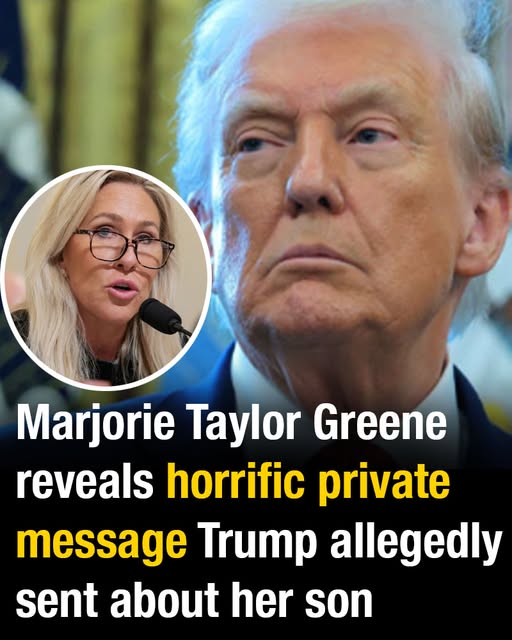
Marjorie Taylor Greene says the first sign of danger came in the form of a single, loaded word: “traitor.” What followed, she claims, spiraled into something far darker—threats aimed not just at her, but at her family, including her son. And in the most explosive part of her account, she alleges that Donald Trump privately placed the blame for those threats squarely on her shoulders.
Once a fiercely loyal ally, Marjorie Taylor Greene now describes a dramatic and deeply personal fallout. She says she has preserved messages—evidence, in her view, of what was said behind closed doors—but hesitates to release them publicly, fearing potential legal consequences. That hesitation leaves her claims suspended in a tense limbo: serious, unsettling, and as yet unverified.
At the heart of Greene’s account is a broader story about the cost of political allegiance when it fractures. Her break with Trump did not happen quietly. It came after sharp disagreements over issues like the handling of the Jeffrey Epstein case files and rising tensions tied to the Iran crisis. Greene went so far as to publicly suggest invoking the 25th Amendment—an extraordinary move against a figure she once staunchly defended.
She says that was the turning point.
According to Greene, the backlash was immediate and overwhelming—a flood of threats that soon extended beyond political rhetoric into something more personal and alarming. The most shocking claim she makes is that Trump himself sent her a message suggesting that if harm came to her son, she would somehow “deserve it” for her perceived betrayal. It’s an allegation that, if true, would mark a stunning escalation from political rivalry to something far more disturbing.
Yet, there has been no direct response from Trump or his close circle. Silence, in this case, only deepens the uncertainty. Greene insists the messages exist. Critics question why they haven’t been shown. And in the middle of it all is a 22-year-old whose name, she says, has surfaced in threatening communications—an unsettling detail that shifts the story from political drama to something far more human.
What emerges is not just a tale of political infighting, but a portrait of how quickly alliances can turn, and how far the consequences can reach. When rhetoric hardens into hostility, and loyalty gives way to accusation, the fallout doesn’t stay contained to podiums or headlines—it can spill into the most private corners of people’s lives.
And that leaves a lingering, uncomfortable question: when political conflict becomes this personal, where does accountability begin—and where, if anywhere, does it end?