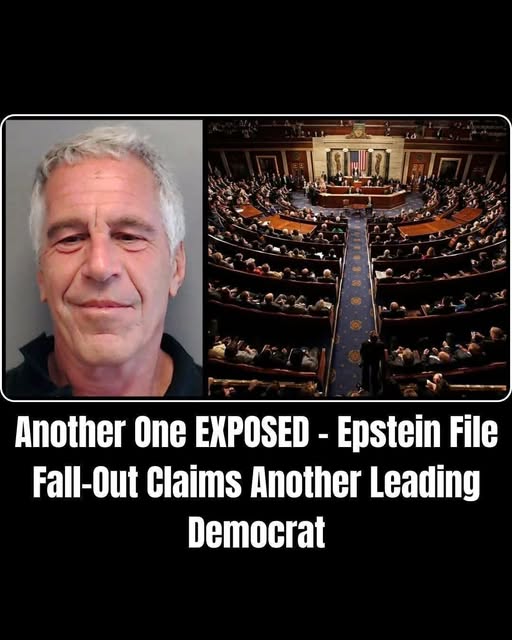
In the middle of an already high-stakes oversight hearing on Capitol Hill—where every word, gesture, and expression is scrutinized—an unexpected moment stole the spotlight. Democratic Representative Lena Marlow, seated among her colleagues and listening intently to testimony, was caught in a single, perfectly timed photograph. The image, snapped by a press photographer, appeared to show her discreetly texting on her phone. What might have otherwise been an unremarkable lapse in decorum instantly became explosive: the contact name visible on her screen read “Epstein.”
Within minutes, the photo ricocheted across social media platforms, igniting a frenzy of speculation. Commentators, pundits, and political opponents rushed to interpret the image, many drawing immediate—and often dramatic—conclusions. The name alone was enough to trigger public intrigue and suspicion, and critics wasted no time framing the moment as something far more than a simple distraction during a hearing. Supporters, meanwhile, urged caution, arguing that a single snapshot devoid of context was hardly evidence of wrongdoing.
When reporters surrounded Marlow after the hearing adjourned, she appeared visibly unsettled but composed enough to address the controversy. She dismissed the uproar as a gross exaggeration, insisting that the situation had been “blown wildly out of proportion.” According to Marlow, the contact labeled “Epstein” in her phone was not the figure many had immediately assumed, but rather Eliot Epstein, a local technology consultant who had been working with her office on cybersecurity and IT-related issues. She explained that, at that very moment during the hearing, she had been experiencing technical difficulties with her tablet—issues that threatened to derail her access to critical notes—and had reached out to him for immediate assistance.
Her explanation, however, did little to quell the growing storm. Critics quickly zeroed in on what they saw as inconsistencies. They questioned why a sitting member of Congress would bypass her own staff—who typically handle such logistical concerns—in favor of texting an external consultant during a nationally televised proceeding. Some lawmakers openly ridiculed her defense, labeling it “the most absurd excuse given on the Hill this year,” while others called for transparency, demanding that Marlow release the text messages to substantiate her claims. To them, her response only deepened the mystery, adding fuel to an already volatile political climate.
Marlow’s team stood firm amid the mounting pressure. They refused to release private communications, arguing that doing so would set a dangerous precedent and reward speculation driven by a misleading image. They reiterated that Eliot Epstein was a legitimate professional contact, that his role with the office could be verified, and that the controversy itself was a textbook example of how quickly narratives can spiral when stripped of context. In their view, the incident was less about substance and more about perception—an opportunistic moment seized and amplified in the age of viral media.
For now, the episode lingers as a striking illustration of modern political reality: how a single photograph, captured in a fraction of a second, can ignite widespread outrage, shape public perception, and place reputations under intense scrutiny. Once such a narrative takes hold, it becomes remarkably difficult to contain—no matter how mundane the truth behind it may ultimately be.