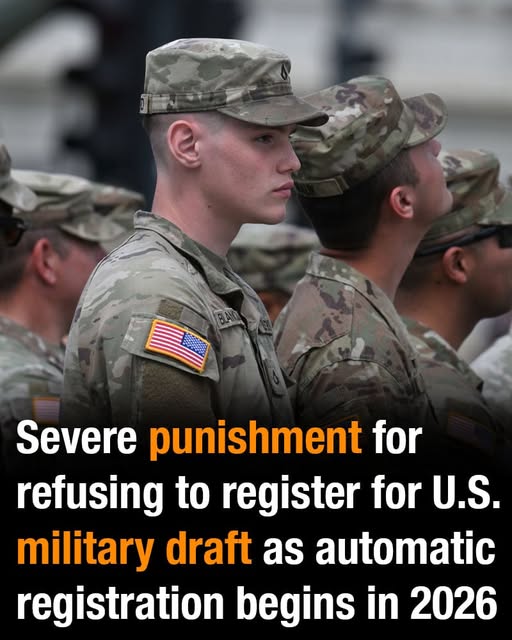
The clock is already counting down—quietly, relentlessly—and almost no one seems to grasp the magnitude of what’s about to change. Within the next few years, the United States will undergo a subtle but profound shift in how it handles Selective Service registration. What has long been a personal responsibility—something young men must actively complete on their own—will soon become automatic, embedded seamlessly into government systems. No forms to remember. No deadlines to miss. No action required.
But here’s the part that rarely gets said out loud: that future isn’t here yet.
Between now and the end of 2026 lies a narrow, easily overlooked window—a transition period where the old rules still apply with full force, even as the new system looms just ahead. For millions of young men turning eighteen during this time, nothing has changed. They are still expected to know the requirement, understand the process, and complete it on time without error. There are no reminders guaranteed, no automatic safety nets, no forgiveness for oversight.
And the consequences of missing that step? They are anything but minor.
Failing to register doesn’t just disappear into bureaucracy—it can follow someone for years, quietly closing doors before they even realize they were there. Access to federal student aid can vanish. Eligibility for government jobs can be stripped away. In some cases, the failure can even be treated as a felony offense, carrying long-term implications that shape careers, finances, and reputation. What might feel like a small administrative detail can harden into a permanent barrier, turning a simple mistake into a defining mark.
Meanwhile, the upcoming automated system is being framed as progress—and in many ways, it is. It promises efficiency, consistency, and a future where compliance happens in the background, without stress or confusion. Registration will no longer depend on awareness or initiative; it will simply happen, folded into existing federal records like an invisible checkpoint of citizenship.
But progress, in this case, has a blind spot.
Because for those caught in the transition—those who come of age just before automation takes over—the burden remains entirely personal. They are expected to navigate a system that is already on its way out, with rules that still carry full weight but receive less and less public attention. It’s a strange and precarious position: standing between two eras, where one system is fading and the other hasn’t yet arrived.
This is the quiet edge of change—the part that doesn’t make headlines. A generation caught in the gap, where responsibility hasn’t eased, but awareness has. Where the safety net is promised, but not yet delivered. And where something as simple as missing a form isn’t just an oversight—it’s a risk that can echo far into the future.