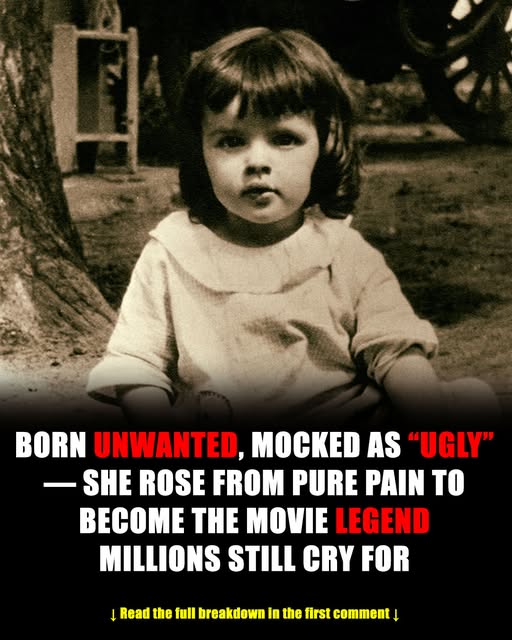
Her smile was engineered to dazzle. Her suffering was not.
The world remembers Judy Garland as a girl bathed in Technicolor light, forever skipping down a yellow brick road toward something bright and promised. But her life was never a fairy tale—it was a meticulously constructed illusion, one that demanded everything from her and gave very little back. What looked like magic on screen was, behind the curtain, a slow and deliberate unraveling.
She was born Frances Ethel Gumm, a child whose earliest memories were shaped by footlights and applause. Vaudeville stages became her classroom, where she learned a dangerous lesson far too young: love was conditional, and it sounded like clapping hands. Approval meant survival. Silence meant erasure.
When Metro-Goldwyn-Mayer took her in, they didn’t simply discover a star—they refined a commodity. They stripped away the softness of childhood and replaced it with precision. Her name was changed. Her appearance was altered. Her body was scrutinized, controlled, and reduced to a set of studio-approved measurements. Executives dictated how she should look, sound, sleep, and even feel. Exhaustion was treated as weakness. Hunger was treated as discipline.
To maintain the illusion, they turned to chemistry. Pills to wake her. Pills to slow her down. Pills to reshape her body into something the camera would love. Rest became a liability. Childhood became an inconvenience. And somewhere in that relentless cycle, the line between performance and survival blurred until it disappeared entirely.
Even at home, there was no refuge. Her mother, Ethel Marion Milne, often treated her less like a daughter and more like a fragile investment—something to be managed, protected, and, above all, made profitable. The message was constant and clear: failure was not an option, because too much depended on her success.
And yet, something within her refused to be fully manufactured.
Onstage, in those rare, electric moments, the machinery faltered. The illusion cracked. And through it came something raw, something real. When Dorothy Gale sang about a place “somewhere over the rainbow,” it didn’t feel like fantasy—it felt like longing. A quiet, aching confession from someone who understood, perhaps better than anyone, that “home” was not a place she had ever truly known.
That is why she endures.
Not as a perfect icon frozen in cinematic color, but as something far more haunting—a mirror held up to the cost of perfection. Her voice carried more than melody; it carried truth. The kind that cannot be scripted, cannot be polished, and cannot be contained.
We didn’t just watch Judy Garland shine.
We watched what happens when a child is turned into a miracle on demand—and expected to survive the weight of it.