Minnesota’s Billion-Dollar Scandal: Handcuffs, Accusations, and a Political Firestorm
The warning was blunt. And it didn’t stay behind closed doors — it was televised for the nation to see.
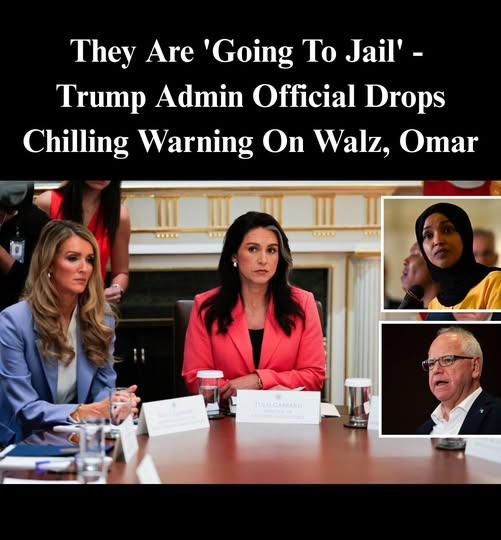
SBA Administrator Kelly Loeffler appeared before the cameras and delivered a stark message: Minnesota’s billion-dollar scandal is “just the tip of the iceberg,” and those responsible will face consequences — including handcuffs and federal prosecution. Her words signaled more than outrage; they were a promise of accountability and a preview of a national reckoning. Investigators have already uncovered thousands of fraudulent SBA loans, involving roughly 7,900 loans and nearly 6,900 individuals, a figure that underscores the scale of the abuse. Loeffler’s pledge that perpetrators will be banned from future SBA programs and referred for criminal charges sets the stage for what could become a wave of high-profile cases, reshaping public confidence in pandemic-era relief efforts.
But while Loeffler’s warning reverberates through courtrooms and regulatory agencies, politics is seizing the moment. Minnesota Congresswoman Ilhan Omar finds herself at the center of a storm, caught between legislative legacy and scandal. Her MEALS Act, passed with broad bipartisan support to ensure children continued receiving meals during school closures, is now being portrayed by opponents as a potential gateway for fraud, allegedly tied to the Feeding Our Future scandal rocking her district.
The controversy intensifies as allegations emerge suggesting that individuals within Omar’s orbit may have benefited from the scheme. Complicating matters further, a former staffer has already been convicted in connection with the fraud, giving her challengers ammunition to frame the issue as a failure of oversight — or worse, complicity. In the charged atmosphere of federal investigations, political campaigns, and national media scrutiny, the narrative is already forming: a tangled web of legislative intent, administrative oversight, and deliberate criminality.
As federal prosecutions continue to advance, Minnesota may serve as the opening chapter in a much larger story. The scandal raises urgent questions: How did relief funds, designed to sustain communities in crisis, become vulnerable to abuse? How will accountability be enforced without scapegoating honest officials? And to what extent will political ambition shape public perception of the crisis?
For Loeffler, the focus is clear: justice, deterrence, and restoring trust. For Omar, the stakes are intensely personal and political — every misstep, every allegation, every connection to the scandal threatens to define her career and overshadow her legislative achievements.
The Feeding Our Future case is more than a local controversy. It is a test of systems, ethics, and accountability in a pandemic-era government — a reminder that even well-intentioned programs can be exploited when oversight fails. And as handcuffs, subpoenas, and partisan headlines converge, Minnesota may soon reveal how fragile trust in public institutions really is, and how easily good intentions can be weaponized in a climate of political warfare.
The scandal is unfolding in real time, and one thing is clear: careers, communities, and political reputations hang in the balance. For both regulators and legislators, the question remains — who will be held accountable, and who will survive the storm?