Two Storms, One Hemisphere: The U.S. Confronts China and Latin America
The warning hit Washington like a slap across the face.
In the same 24 hours, the United States found itself cornered by two crises of its own making — one on paper, one in words — that together threatened to reshape the delicate balance of power in the Western Hemisphere.
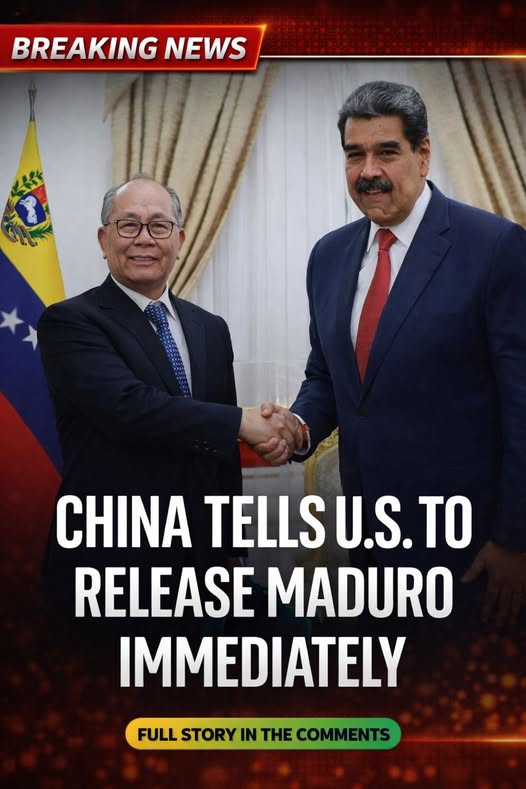
First, China made its position unmistakably clear. In a move that stunned diplomats, Beijing demanded the immediate release of Venezuela’s Nicolás Maduro, just hours before his explosive court appearance in New York. What might have been dismissed as diplomatic posturing was, in reality, a direct challenge to U.S. authority, sovereignty, and moral credibility. By publicly tying its own prestige to the fate of a controversial Latin American leader, China signaled a new boldness: it is no longer content to contest Washington only in the South China Sea, trade disputes, or technology wars. The stage for confrontation has expanded, and the U.S. now faces a challenge deep in its own geopolitical backyard.
Almost immediately, Donald Trump amplified the tension in a different direction. In remarks aimed at Colombia, he called the nation’s president a “sick man” and suggested his tenure was coming to an end. What might have been routine political hyperbole in other contexts instead sparked alarm across Latin America. For Colombians, the comment was unmistakable — a thinly veiled threat. For the broader region, it resurrected an old anxiety: that Washington still views Latin America not as a constellation of fragile, sovereign democracies, but as a chessboard upon which the U.S. can move its pawns, knights, and bishops at will.
In combination, the two events exposed an uncomfortable truth: power is shifting, alliances are cracking, and miscalculations carry immediate consequences. Latin American leaders are being forced to navigate a world in which the United States can be aggressive and unpredictable, while China is willing to escalate and challenge openly, leveraging both legal forums and international opinion.
For Washington, the stakes could not be higher. Maduro’s detention has always been symbolic, a test of U.S. resolve and the global appetite for intervention in authoritarian regimes. Now, with Beijing asserting its influence so publicly and Trump injecting personal bravado into the mix, the United States faces the prospect of losing control over both the narrative and the reality of its influence in the Americas.
The broader message is clear: the days of unilateral U.S. action in Latin America, without consequence or international scrutiny, may be numbered. The hemisphere is watching, regional coalitions are quietly recalibrating, and global rivals are measuring just how far the U.S. will push — and how far they are willing to respond.
In this delicate, high-stakes moment, a single misstep — a careless statement, a misjudged operation, or an underestimated opponent — could ignite a crisis with consequences far beyond Caracas or Bogotá. For Washington, the challenge is no longer just about exerting power; it is about preserving credibility, alliances, and the fragile order that underpins a region long accustomed to American dominance.
The question now looms: can the United States navigate these storms, or has the game already changed in ways that will define hemispheric politics for years to come?