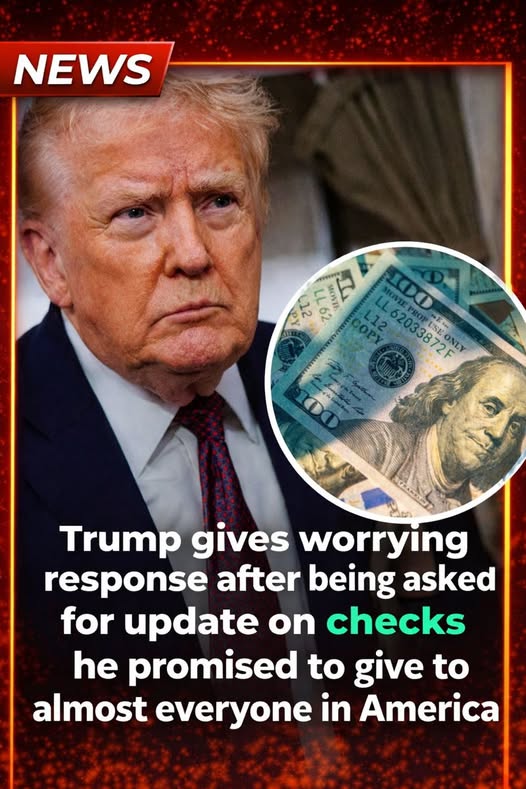
In the stillness of the Oval Office, beneath the portraits and polished wood that frame America’s highest seat of power, an unexpected pause seemed to echo louder than any speech. When a reporter reminded former President Donald Trump of his bold promise to send $2,000 checks to “almost everyone in America,” the air shifted. The pledge—once delivered with confidence and sold as a tariff-funded windfall for hardworking Americans—suddenly appeared distant, as if it belonged to another conversation, another moment, another crowd.
For millions of families, that promise was never just a headline. It was penciled into household budgets, factored into overdue rent, medical bills, car repairs, tuition payments, and grocery lists growing more expensive by the week. It was hope with a dollar amount attached.
But when New York Times reporter Katie Rogers pressed for clarity, the response felt uncertain. Trump appeared to conflate the widely promoted $2,000 payments with a separate $1,776 bonus for service members. After a brief and noticeable hesitation, he reaffirmed that the checks would still arrive “toward the end of the year,” funded by what he described as “substantial” tariff revenue.
Yet beyond the reassuring words lies a harsher arithmetic.
The proposed plan carries an estimated cost of roughly $600 billion. So far, tariff collections have generated only about $90 billion—leaving a staggering gap between aspiration and available funds. Adding to the uncertainty is a looming Supreme Court decision that could require portions of tariff revenue to be refunded, potentially shrinking the funding pool even further. Legal challenges gather. Fiscal realities loom. Economists warn that injecting hundreds of billions into the economy could reignite inflation just as families struggle to regain financial footing.
Meanwhile, lawmakers within Trump’s own party question the logic of financing broad stimulus payments through tariffs—policies that critics argue function as indirect taxes ultimately borne by American consumers. The administration, in a twist not lost on observers, has even encouraged Americans to save the promised money—money that has yet to materialize.
Behind the spectacle of press briefings and political sparring are ordinary households refreshing news feeds and recalculating expectations. Parents wonder whether to postpone purchases. Small business owners debate whether relief is truly on the horizon. Retirees weigh rising costs against uncertain assistance. In living rooms across the country, the difference between $0 and $2,000 is not symbolic—it is tangible, immediate, and deeply personal.
What now hangs in the balance is more than a line item in a federal budget. It is trust.
When leaders make sweeping promises beneath bright lights and rolling cameras, those words travel far beyond the room. They enter kitchens, workplaces, and quiet late-night conversations about survival and stability. If the checks arrive, they may provide relief. If they do not, the cost will not only be financial.