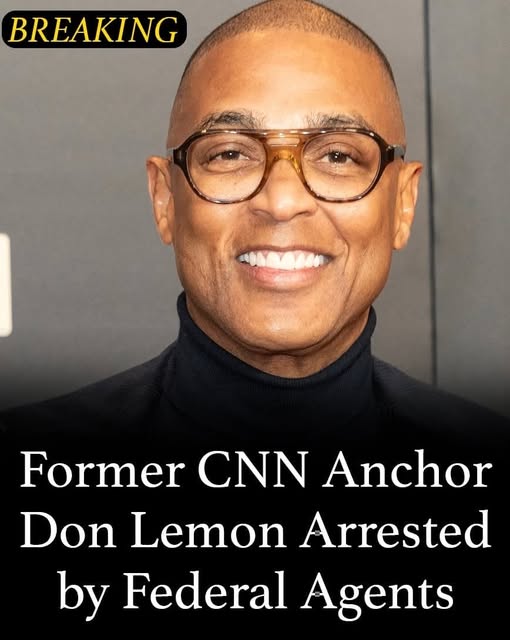
Former CNN anchor and veteran journalist Don Lemon was taken into custody by federal authorities in Los Angeles on the evening of January 29, 2026, in a development that has sent shockwaves through the media world. Lemon, widely known for his decades-long career in broadcast journalism, was in Southern California to cover the 68th Annual Grammy Awards when federal agents arrested him at his hotel.
The arrest was confirmed by Lemon’s attorney and quickly picked up by major news outlets across the country, thrusting the high-profile journalist back into the national spotlight. Rather than being linked to the entertainment event he was covering, the detention stemmed from Lemon’s involvement — as a reporter — with a controversial demonstration that occurred nearly two weeks earlier.
On January 18, 2026, Lemon traveled to St. Paul, Minnesota, where he was reporting on a heated anti-ICE protest that drew demonstrators into Cities Church during a Sunday worship service. Activists were protesting federal immigration enforcement policies, targeting the church in part because one of its pastors also held a leadership position with U.S. Immigration and Customs Enforcement (ICE). The protest made national headlines for its disruption of a religious service and the fierce public debate it ignited over immigration policy and civil liberties.
Video and eyewitness reports show that Lemon was present as part of his journalistic coverage, livestreaming events and interviewing participants and congregants during the incident. Though he maintained he was there in a reporting role, authorities later secured a federal grand jury indictment that included charges tied to the protest, alleging interference with worshippers’ rights and conspiracy under federal law.
Lemon’s arrest in Los Angeles — coming weeks after the Minnesota demonstration — has sparked intense debate. Supporters and press freedom advocates argue that detaining a journalist for covering a protest represents a troubling precedent for the First Amendment and freedom of the press. Lemon himself has publicly decried the arrest as an attempt to intimidate journalists, insisting that he was simply doing his job.
Meanwhile, critics contend that the protest’s disruption of a worship service crossed legal and ethical lines, and that authorities are right to hold all those involved accountable. As the legal proceedings continue to unfold, Lemon’s case has become a flashpoint in a broader national conversation about civil liberties, immigration policy, and the role of journalists in covering contentious political events.