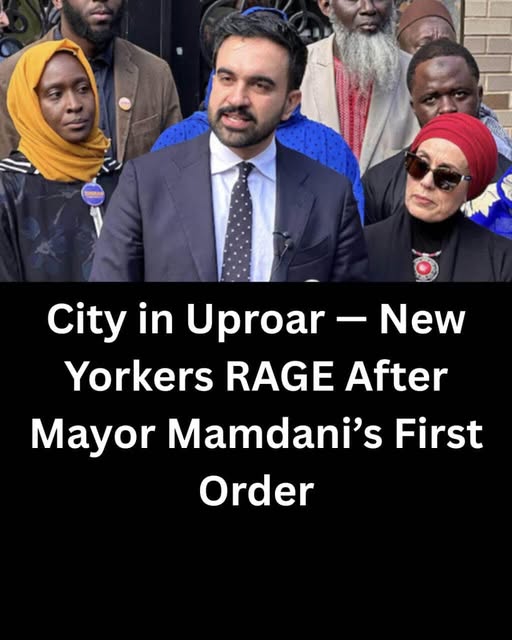
The city didn’t erupt — it flinched. For one split second, before anyone fully understood what had changed, New York felt the tremor of power shifting hands. In a single afternoon, the quiet, decades-old trade between landlords and lawmakers—those unspoken understandings that kept rent laws pliable and resistance fragmented—snapped. The political class that once whispered orders in back rooms suddenly felt the floor tilt beneath them. What began as a campaign promise had become binding law, and the people who were supposed to lose had, somehow, won.
Phones lit up across the city like alarms. In glass-walled penthouses and cramped legal aid basements, in developer offices and union halls, everyone was calling everyone else, trying to calculate what the new order meant for them. Lobbyists coughed up old talking points that suddenly sounded hollow. Landlords murmured threats in tones that couldn’t quite hide the tremor underneath. Smiles at City Hall looked calm, but inside them was panic. Because beneath the speeches and press releases, one truth was undeniable: New York had picked a side.
And the man behind the shift, Assemblymember Zohran Mamdani, hadn’t come to preserve the old truce. He’d come to break it. His rise was less a campaign than a collision — a deliberate confrontation with a system built to keep tenants exhausted and afraid. By reviving the long-dormant Mayor’s Office to Protect Tenants and placing it under the command of housing organizer Cea Weaver, Mamdani transformed a forgotten bureaucracy into a weapon. It wasn’t symbolic. It was surgical. The office that once collected complaints would now coordinate offensives. The message was unmistakable: the era of quiet displacement was over.
For landlords who had grown accustomed to impunity — to “lost” paperwork, to slow enforcement, to a city that politely looked away — this was a declaration of war. For tenants, it was something closer to a miracle: the first flicker of a government that might actually fight for them, not just speak for them.
But in New York, symbolism doesn’t pay rent. And Mamdani knows it. His reforms are more than political theater; they’re wagers on the city’s soul. The LIFT Task Force, charged with unearthing every scrap of public land that could be turned into housing, and the SPEED Task Force, created to bulldoze through the red tape strangling affordable development, are both designed around a radical question: Can New York build its future without erasing the people who already live here?
It’s a question that cuts deeper than zoning or budget lines. It’s about belonging — about whether the dishwashers, nurses, delivery workers, and teachers crammed into today’s subways still have a place in tomorrow’s skyline.
Mamdani has tied his political fate to that answer. If this experiment works, if the rent-stressed and the working class can find permanence in a city that has long priced out its conscience, then this gamble — this jolt of upheaval — will be remembered as a turning point. If it fails, the familiar old machine will reassemble itself, brick by brick, lobbyist by lobbyist, until the status quo returns stronger than before.
For now, though, the balance has shifted. The calls have been made. The smiles have frozen. And across New York, in every neighborhood where tenants once whispered and landlords once ruled, a new question hums in the air like a live wire: What happens when the city finally stops pretending to be neutral?