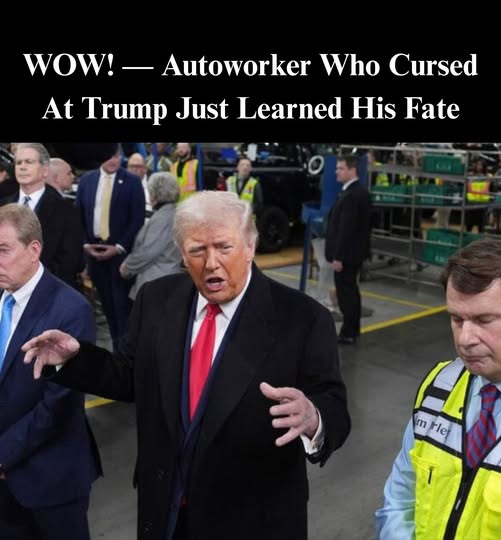
A single shouted word can sometimes detonate like a grenade — and in Dearborn, it did. What was supposed to be a routine presidential visit to a Ford manufacturing plant became a flashpoint for the country’s rawest political wounds. In the middle of roaring machinery and the smell of motor oil, a worker’s voice cut through the noise: “Pedophile protector!”
For a heartbeat, the cavernous factory froze. Cameras swiveled. Aides stiffened. Donald Trump stopped midstride, his expression hardening before his response — a brief, unmistakable middle finger — was caught on a dozen smartphones. Within hours, the clip was everywhere: a viral spectacle of fury, defiance, and the fragility of power under public gaze.
The man who shouted, 36-year-old T.J. Sabula, says he didn’t plan to make headlines. He calls it a moment of conscience — a protest born of frustration with what he views as a system that shields the powerful. “You don’t get many chances to speak truth to someone like that,” he told reporters later. “I took mine.”
Sabula claims he paid the price almost immediately. Within days, he says, Ford management called him into a meeting and suspended him for “disruptive behavior.” To him, it wasn’t about workplace rules — it was about political punishment. To the company, it was a matter of maintaining professionalism in the presence of the president. Officially, Ford refused to discuss details, citing internal policy. Unofficially, whispers among employees suggest that corporate and political nerves had been hit in equal measure.
But the story didn’t end at the factory gate. Online, the confrontation ignited a digital war. Trump loyalists accused Sabula of disrespecting the presidency; his defenders hailed him as a blue-collar whistleblower against hypocrisy. The clip blurred into memes, reaction videos, and arguments over free speech — each side convinced the other was proving its point.
Meanwhile, miles away in Washington, another showdown over loyalty and dissent was unfolding. Trump’s Justice Department abruptly dismissed a top federal prosecutor who had refused to reopen a politically charged case against former FBI Director James Comey — a firing that insiders described as “retaliation dressed up as reorganization.”
Two stories, seemingly unrelated, began to echo each other. A factory worker in Dearborn and a federal lawyer in D.C. — both accused of stepping out of line. Both facing swift consequences. One wielded a wrench, the other a legal brief, yet the message to others watching was eerily similar: challenge authority, and risk your career.
What happened on that factory floor was more than a crude exchange or a viral clip. It became a test case for a larger American question — who gets to speak without consequence when power is in the room? The answer, it seems, depends on which side of the power you stand.
In the age of phones that never stop recording and politics that never stop punishing, one man’s shouted insult has become something larger: a symbol of how fragile dissent has become in the country once known for protecting it.