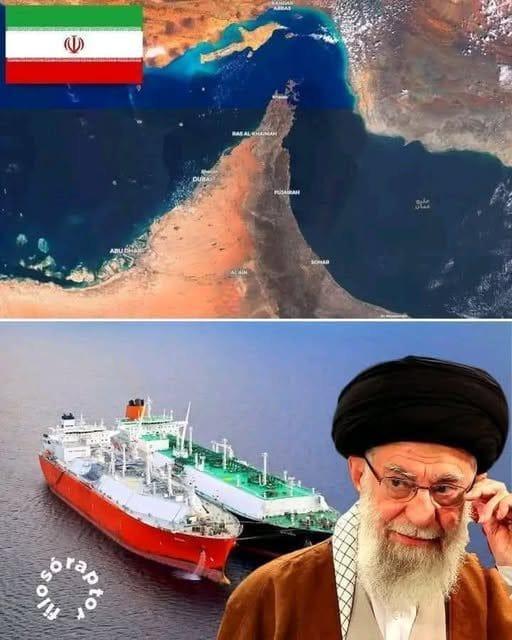
The Strait of Hormuz Crisis: How a 34-Kilometer Stretch of Water Could Shake the Entire World
A single flashpoint in the Persian Gulf now threatens to send shockwaves through the global economy. The Iranian Parliament has hinted that it could close the Strait of Hormuz — a move that, if carried out, could trigger an international crisis unlike anything the world has seen in decades.
At first glance, it’s just a narrow waterway — only 34 kilometers wide at its tightest point. But beneath those calm blue waves flows the lifeblood of the modern world: 30% of global oil shipments and nearly one-third of all liquefied natural gas (LNG). Every tanker, every barrel, and every cubic foot of gas that passes through this strait keeps economies humming, airlines flying, and cities lit.
If Iran seals this artery, even temporarily, the global energy system could choke — setting off a chain reaction that would send oil prices soaring, markets crashing, and inflation spiraling across continents.
Why the Strait of Hormuz Matters
The Strait of Hormuz sits between Oman and Iran, connecting the Persian Gulf to the Arabian Sea. It is the world’s most important oil transit chokepoint — a bottleneck through which nearly 20% of the world’s daily oil consumption must pass. Every major oil-producing nation in the Gulf — including Saudi Arabia, the UAE, Kuwait, Qatar, and Iraq — relies on it to export their crude.
For decades, this slender corridor has been both a strategic asset and a geopolitical powder keg. The U.S. Navy patrols its waters. Iran guards its northern shores. Every ship that sails through it is shadowed by the uneasy tension of military surveillance and political distrust.
The Trigger: Rising Tensions Between the U.S. and Iran
The latest escalation comes after U.S. airstrikes on Iran’s nuclear facilities, an act that Tehran has condemned as “aggression.” In response, Iranian lawmakers have publicly discussed blocking the Strait of Hormuz — a move intended to punish Western powers by strangling the world’s energy supply.
If Iran follows through, the results could be catastrophic. Oil analysts warn that prices could surge past $150 per barrel within days, crippling fragile economies already battling inflation. Airlines, shipping companies, and manufacturing hubs would face massive cost spikes, all trickling down to everyday consumers.
What It Means for India
For India, the world’s third-largest oil importer, this crisis hits dangerously close to home. Nearly 60% of India’s crude oil imports come from the Gulf region, with a large portion passing directly through the Strait of Hormuz.
A blockade would mean:
- Skyrocketing fuel prices at petrol pumps across India.
- Increased costs of flights and logistics, affecting both businesses and travelers.
- Pressure on the rupee, as the government struggles to pay higher import bills.
- Inflationary ripple effects, pushing up food, transport, and manufacturing costs.
India’s strategic oil reserves could cushion the blow temporarily — but only for a few weeks. Beyond that, the country would face serious disruptions unless alternative routes or emergency diplomatic channels are opened.
The Global Domino Effect
The consequences wouldn’t stop at India’s borders. The entire global supply chain would feel the strain. Europe, heavily reliant on Gulf LNG, could face a winter energy crunch. Asia’s industrial giants — China, Japan, and South Korea — would scramble for alternative sources, driving competition and prices even higher.
The United States, though more energy independent today, would still face market turmoil. Investors would flee riskier assets, global trade would slow, and inflation — already a global concern — could soar again.
China, meanwhile, may see an opportunity. As Iran’s major ally and oil customer, Beijing could leverage the situation to strengthen its strategic ties with Tehran, potentially reshaping alliances across the Middle East.
Could Iran Really Close the Strait?
While Iran’s threats are serious, completely shutting down the Strait would also hurt its own economy. Iran relies on these same waters to export its oil. Still, even partial disruption or naval skirmishes could create enough fear to jolt global markets.
Military analysts warn that the U.S. Fifth Fleet, based in Bahrain, would respond immediately to ensure freedom of navigation. Yet any confrontation risks sparking a wider regional conflict — involving not only the U.S. and Iran, but also Gulf allies, Israel, and possibly China or Russia.
The Bottom Line
A narrow waterway, barely 33 kilometers across, now holds the world’s economic fate in its grip. The Strait of Hormuz is more than a strip of sea — it’s a symbol of how deeply interconnected, and dangerously fragile, our global systems have become.
If Iran truly closes it, the ripple effects will reach every corner of the globe — from Wall Street to Mumbai, from Beijing to Berlin. Your fuel prices, flight tickets, and even grocery bills could all feel the impact.
As world powers brace for what could become the defining geopolitical crisis of the decade, one truth is clear: in a globalized world, even a few miles of ocean can decide the destiny of nations.