He didn’t walk away.
He turned.
In that split second, the factory’s hum — the clanging of steel, the low murmur of workers, the distant whir of cameras — seemed to fall silent. Then came the flash of anger that only Donald Trump can summon with such combustible energy.
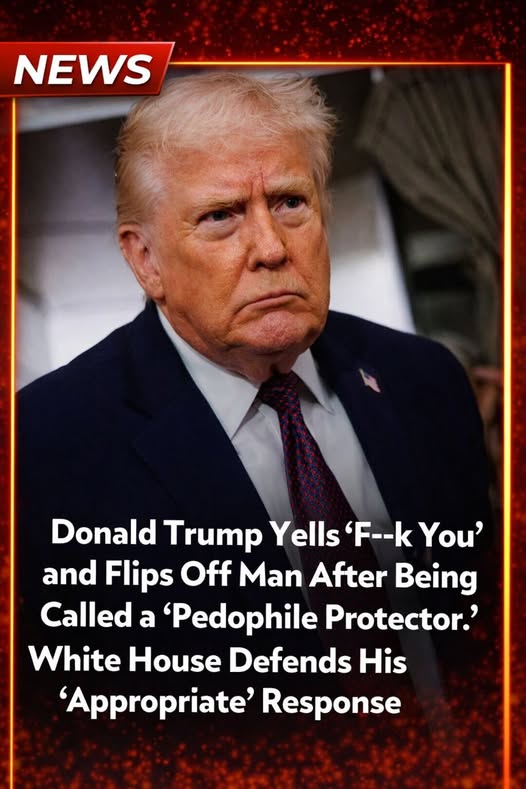
It happened in Detroit, inside the gleaming Ford F-150 assembly plant — a place meant to showcase American strength and manufacturing pride. But on this day, it became the stage for something far more volatile. A worker in the crowd shouted two words that sliced through the noise: “Pedophile protector!”
For a heartbeat, Trump’s shoulders stiffened. He didn’t flinch. He didn’t smirk. Instead, the 79-year-old president spun around, eyes locked on his heckler, and answered with an unmistakable gesture — a raised middle finger — punctuated by a sharp, furious, “F—k you.”
The moment lasted no more than two seconds, yet by nightfall it was everywhere — slowed down, looped, dissected, and meme-ified across every corner of the internet. Cable networks played it on repeat. Commentators debated whether it was the “real Trump” resurfacing or a man cracking under relentless scrutiny. The White House called the response “appropriate under the circumstances,” while critics described it as a chilling reflection of how deeply the Epstein scandal has burrowed into America’s highest office.
Because this wasn’t just a heckler and a hot temper. It was rage meeting accusation, power meeting distrust, and a country watching its president lose control — if only for a moment — over a name that refuses to stay buried: Jeffrey Epstein.
The timing couldn’t have been more explosive. The Justice Department had just begun releasing portions of the long-sealed Epstein files — tens of thousands of pages of documents, testimonies, and correspondence implicating high-profile figures from business, politics, and entertainment. The department insists it’s moving “methodically,” but admits millions more records remain classified, fueling suspicion that the most sensitive names — the most powerful ones — are still being protected.
To Trump’s supporters, the outburst in Detroit was righteous anger — a man unfairly smeared, fighting back against what they call a “political witch hunt wrapped in tabloid filth.” They argue that if there were truth to the allegations, his enemies would have already weaponized it. To his detractors, the scene revealed something darker: a president cornered by his own fury, haunted by an association he can’t outrun, and unable to separate personal indignation from the gravity of national office.
The moment has since taken on a life of its own. Late-night hosts replay it for laughs; analysts debate its political fallout. But beyond the noise, the clip embodies something raw and unsettling — the image of a nation split not just over what happened, but over what it means.
Was it defiance or desperation? Authenticity or unraveling?
As the Justice Department’s slow trickle of disclosures continues and the shadow of Epstein’s crimes stretches across years and administrations, America finds itself staring at a grainy factory video — trying to decide whether it just witnessed a man defending his honor, or a leader revealing his breaking point.
And somewhere between those two interpretations lies the truth — blurred, bitter, and still out of reach.