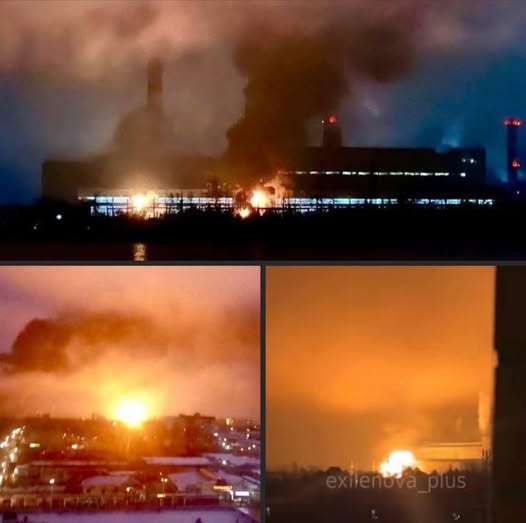
The warning was not a drill. It arrived without fanfare, yet it carried the weight of generations. Across time zones and languages, screens flickered, radios crackled, and phones buzzed in unison — a global pulse of cold, clinical urgency that somehow felt intimate. It wasn’t just information; it was a jolt that cut through the noise of daily life.
Governments called it a “precautionary alert.” But people heard something else entirely. They heard history clearing its throat.
In border towns, soldiers instinctively glanced toward the horizon. In capital cities, politicians froze mid-briefing, their carefully rehearsed confidence faltering for just a second. In quiet suburbs, families paused mid-sentence, forks suspended above plates, eyes flicking toward the television as the words This is not a test echoed across the room. Children asked questions parents weren’t ready to answer. Even the air seemed to hold its breath.
Across continents, that single alert illuminated an uncomfortable truth the world had been trying not to face: this moment has been building for years. The uneasy drift toward confrontation didn’t happen overnight. It came in pieces — in trade wars disguised as policy disagreements, in rhetoric that traded empathy for ego, in digital echo chambers that turned neighbors into strangers. Conflicts once confined to distant battlefields have been quietly leaking into living rooms through rising prices, chaotic headlines, and polarized conversations that split families as easily as nations.
Officials stepped before cameras and offered calm reassurance: Stay informed. Stay calm. Follow official guidance. But beneath the polished statements, there was a tremor — a silent admission that control was slipping. Behind every briefing was a plea not to the public, but to the world’s leaders themselves: step back before the brink becomes the fall.
This warning wasn’t just about a missile, a border clash, or a power grid under threat. It was about an entire system — one groaning under the weight of mistrust, unfinished grudges, and rivalries that no one remembers how to end. It was about humanity’s oldest pattern repeating itself: the slow, stubborn sleepwalk toward disaster.
And yet, buried within the fear was a fragile kind of hope — a brief, flickering chance for reflection. The alert forced the world to look in the mirror and see just how interdependent we have become. No nation can truly isolate itself. No economy, no ideology, no wall is high enough to silence the echoes of another’s crisis. The same networks that can spread fear can also spread truth — if only we choose to use them that way.
If dialogue wins over division, this moment could be remembered not as the prelude to collapse, but as the shock that pulled humanity back from the edge. A warning that worked. A pause that mattered. A collective reminder that peace is not a passive inheritance; it is an active decision — one the world must keep making, again and again, before silence falls for good.