The bombs fell first. Then came the handshake.
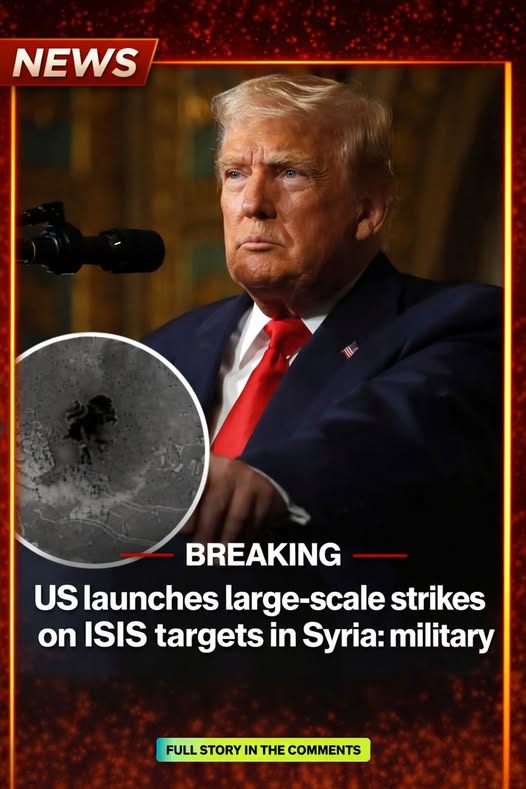
As U.S. warplanes thundered across the Syrian sky, precision strikes ripped through ISIS strongholds from Raqqa to Deir ez-Zor, painting a familiar picture of American might. Flames lit up the night horizon, the rumble of explosions echoing through cities still haunted by a decade of war. But while the world watched the airstrikes — a display of dominance seemingly rooted in the old playbook — something far more consequential was unfolding in the shadows.
Behind closed doors in Damascus, the Trump administration quietly opened a diplomatic channel that would have been unthinkable just months ago. Sanctions were lifted, decades of official isolation suddenly dissolved, and emissaries from Washington were seen entering guarded government compounds once branded as forbidden territory.
Supporters hailed the move as a masterstroke — a bold, pragmatic reset that could reshape the Middle East. Critics, however, called it a betrayal cloaked in diplomacy, arguing that the U.S. had traded moral credibility for the illusion of stability.
In one sweeping day, American policy toward Syria veered from punishment to partnership, from isolation to negotiation. The airstrikes projected strength, reminding allies and adversaries alike that American firepower still dictates the tempo of war. Yet the quiet meeting that followed — between Tom Barrack, one of Trump’s closest confidants, and members of Syria’s new leadership circle — revealed a subtler, riskier agenda.
According to sources familiar with the talks, the meeting was less about peace and more about pragmatism: rebuilding contracts, energy deals, and the promise of regional influence. For a White House seeking a foreign-policy victory in an election season, Syria offered a dangerous but tantalizing opportunity — to claim the mantle of peacemaker while retaining the image of an unflinching warrior.
But this strategy came with a moral cost.
The lifting of sanctions, described by the administration as “giving Syria a chance,” rests on a fragile assumption — that a regime once synonymous with brutality can reinvent itself as a partner in stability. The bet is that a “new” Damascus will turn its back on years of atrocities and align itself with Western reconstruction efforts. Yet to millions of Syrians displaced, scarred, or silenced by war, the promise rings hollow.
In the streets of Raqqa, where bombed-out buildings lean like exhausted sentinels, survivors watch these diplomatic maneuvers with disbelief. To them, the idea of redemption for a government that once bombed its own citizens feels less like hope and more like a cruel irony. “They rebuild their image before they rebuild our homes,” one shopkeeper told reporters.
For Washington, the calculus is complex. Aligning with a rebranded Syria could help contain extremism, reduce Russian and Iranian leverage, and open doors for U.S. economic influence in the region. Yet it could also legitimize a regime still accused of mass torture, chemical attacks, and systemic repression — crimes that once united the world in condemnation.
Even within Trump’s own circle, the move has stirred unease. Hawks argue that lifting sanctions without meaningful reform hands Damascus exactly what it wants: money, legitimacy, and time. Diplomats counter that isolation achieved nothing, and engagement — however risky — might be the only way to shape Syria’s postwar future.
The stakes are enormous. For Syrians, this gamble could determine whether their shattered nation begins to rebuild or slips back into tyranny. For the United States, it will test whether power can coexist with principle — or whether one must always devour the other.
History will decide what happened in that fateful twenty-four hours — whether it was a flash of strategic brilliance or the opening act of a perilous bargain.
The bombs made the headlines.
But the handshake may define the legacy.