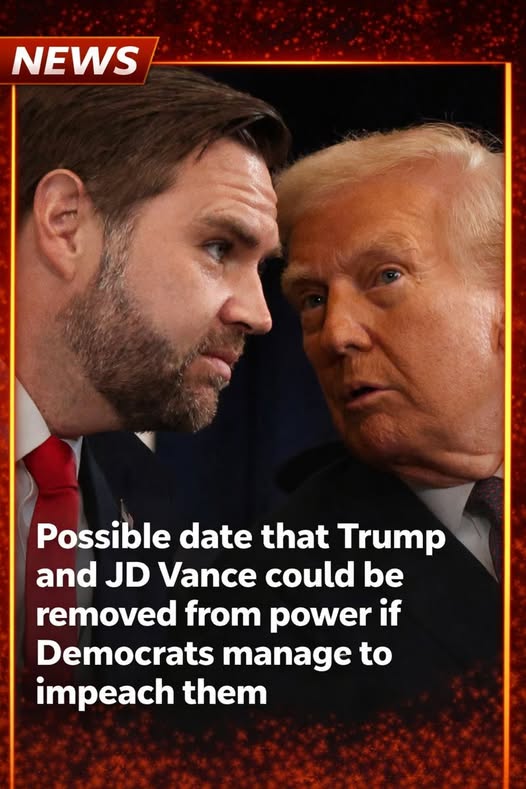
Earlier this week, Donald Trump said the quiet part out loud.
Standing before a crowd of loyal Republicans, he issued a warning that sent shockwaves through Washington’s political bloodstream. If the GOP loses the House in 2026, he cautioned, Democrats will finally have the power to finish what they started — to take him down for good.
It wasn’t just campaign bluster or another off-the-cuff remark. It was a rare moment of candor — an admission that even Trump, the most defiant political survivor of modern times, knows the limits of his armor. Beneath the bravado, there was something unmistakable: fear.
Because this time, the stakes are not just about control of Congress. They are about survival.
If Democrats flip the House in the 2026 midterms, they could move toward a third impeachment the moment the new Congress is sworn in on January 3, 2027. The groundwork is already there — committees quietly revisiting evidence, strategists drafting language, and legal scholars preparing arguments. According to several insiders, articles of impeachment have been outlined since his return to office: allegations of obstruction of justice, constitutional overreach, corruption, and abuse of power.
For a president who has already made history twice — impeached and acquitted both times — the possibility of becoming the first to face a third formal attempt at removal would cement his place in American history in ways even his fiercest critics never imagined.
Trump’s message to Republicans was blunt and unmistakable: Hold the House, or lose everything.
To his allies, it was a rallying cry. To his opponents, it was an opening — proof that he sees impeachment not as a relic of his past but as a shadow stalking his future.
But even if Democrats reclaim the House, the path ahead would be treacherous. Conviction in a Republican-controlled Senate remains an almost impossible climb. History suggests any impeachment would devolve into a savage political war rather than a clean constitutional reckoning — a test of endurance, loyalty, and public willpower rather than truth alone. The process would dominate the headlines, deepen the country’s divisions, and once again push the boundaries of America’s political fatigue.
And yet, within Democratic circles, the question isn’t just whether to impeach — it’s why.
Would another bruising impeachment battle restore accountability, or would it only strengthen Trump’s narrative of persecution? Would it hold power to account, or hand him another chance to play the victim before a base that thrives on grievance?
Trump, ever the showman, seems to understand this better than anyone. His warning to Republicans was both strategy and stagecraft — a preemptive strike that reframes any future impeachment not as a legal reckoning, but as a partisan coup against the will of the people.
In a single week, he managed to turn political vulnerability into political weaponry. Once again, Trump has positioned himself not merely as a man in power, but as the center of an unfolding national drama — a presidency forever racing against the clock, haunted by the past, and terrified of what a Democratic gavel might bring.