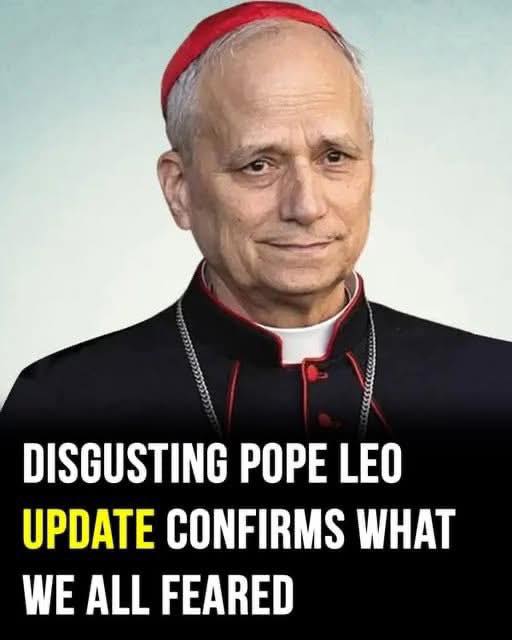
The smoke above the Vatican was white.
As twilight settled over Rome on Thursday evening, the centuries-old signal rose from the Sistine Chapel chimney — thin, curling, and unmistakable. White smoke: Habemus Papam. The world has a new pope.
Moments later, the great bronze doors of St. Peter’s Basilica opened, and a wave of anticipation swept through the crowd gathered below. Pilgrims pressed closer, flags fluttered, and the bells of St. Peter’s rang with the force of history. Then, as cameras from every continent turned toward the balcony, Robert Francis Prevost, a 69-year-old American cardinal from Chicago, stepped into the light.
With a steady voice and a humble smile, he announced the name by which he would now be known: Pope Leo XIV — the first pontiff to take the name Leo in more than a century.
Cheers erupted through St. Peter’s Square, a sound that rippled like a tide through the heart of the Vatican and across the world. For millions of Catholics watching from their homes, it was a moment of renewal — a bridge between faith’s deep past and its uncertain present. The name Leo carried weight, evoking images of strength, wisdom, and reform. It recalled Pope Leo XIII, the 19th-century thinker who steered the Church through the Industrial Age with compassion and intellect.
Yet even as the new pope’s name was still echoing through the square, reactions outside Vatican walls began to splinter. Within hours, social media was ablaze — not just with celebration, but with criticism. Among American commentators, particularly within MAGA-aligned circles, Leo XIV’s election drew sharp remarks. Detractors accused him of being “too global,” “too moderate,” or “too open” to issues of migration, climate, and social justice. Supporters, however, praised his empathy, his deep theological roots, and his reputation for bridging divides — both within the Church and beyond it.
It had been only two days since the College of Cardinals, cloistered within the frescoed walls of the Sistine Chapel, began their deliberations. Behind locked doors and centuries of ritual, 115 cardinals prayed, voted, and waited for the color of the smoke to tell the world what only they knew. When black turned to white, centuries of tradition roared back to life.
As Pope Leo XIV waved to the crowd that night, the emotion on his face told its own story. Here stood a man who had spent decades in quiet service — a priest, a missionary, a scholar — suddenly thrust into one of the most visible and demanding roles on Earth. He spoke simply, offering prayers for peace, unity, and humility. “Let us walk together,” he said, “with faith and courage, toward the future God invites us to build.”
The applause was thunderous. Pilgrims wept. Bells pealed into the night. In the streets of Rome, candles flickered in the hands of believers who felt they were witnessing the turning of a page in history.
Whether Pope Leo XIV becomes a unifying shepherd or a lightning rod for controversy remains to be seen. But for now, one image endures: white smoke against the Roman sky — a symbol that, for better or worse, the Church is entering a new era, led by a man whose journey from America to the Apostolic Palace has already made history.