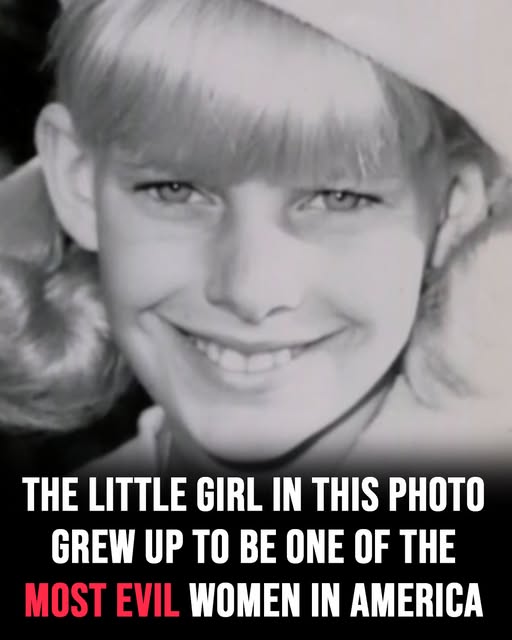
How Dana Gray Became One of the Most Feared Women in America
The little girl in the photograph should have grown up to save lives. She dreamed of helping people, wore a nurse’s uniform with pride, and flashed the kind of confident smile that made everyone believe she had it all figured out. But somewhere between the promise of that child and the woman she became, something broke.
Neighbors saw a glamorous nurse, an athletic thrill-seeker, and a charming friend who laughed easily and lived fast. They saw her pedaling her mountain bike through the hills of Southern California, suntanned and magnetic, always in motion. To them, Dana Gray seemed fearless — but not dangerous. Police saw nothing either, at least not at first.
Then the credit cards began to scream.
What started as a trickle of suspicious charges — spa treatments, designer clothes, jewelry — soon unraveled into something monstrous. Behind every new shopping spree, detectives discovered another dead woman: elderly, vulnerable, found in her own home, strangled with a phone cord or a scarf. Somewhere between the last breath of each victim and the first swipe of her stolen credit card, Dana Gray transformed from a caregiver into a killer driven by control, adrenaline, and vanity.
Her signature was chilling in its simplicity. She would approach her victims — widows living alone in quiet retirement communities — with warmth and charm, often introducing herself as a nurse. They trusted her instantly. Moments later, that trust would turn fatal. Her last words to one woman, whispered as life slipped away, were reportedly a single word: “Relax.”
Dana Sue Gray’s life reads like a script torn in half. On one side stands the overachieving woman shaped by trauma — a volatile, emotionally abusive mother, a turbulent childhood, and the deep, lifelong hunger to feel in control. On the other side stands the predator who killed not out of necessity but for the rush that came after: the power, the shopping bags, the glossy proof that she mattered. Each murder was followed by a spree of indulgence — hair appointments, luxury lotions, a new dress. It was as if she could silence her guilt with perfume and silk.
When she was finally caught in 1994, her arrest stunned those who knew her. The vibrant nurse who had once seemed to embody life and care turned out to have used both as tools of manipulation and death. In the end, her own vanity helped convict her: surveillance cameras and shopping receipts told the story she thought she could hide.
Today, Dana Gray sits behind bars, serving life without the possibility of parole at the California Women’s Prison. The woman once defined by her obsession with youth and luxury now spends her days as an aging inmate — quieter, grayer, her beauty faded but her name still heavy with infamy.
In rare interviews, she claims to have changed. She speaks softly about remorse, about sleepless nights haunted by the women she killed. She has become an advocate for incarcerated women she says “the system has forgotten.” Whether one believes her repentance or not, the echo of her crimes still lingers — in the grief of families, the fear of communities, and in the chilling truth that evil doesn’t always wear a mask. Sometimes it wears a nurse’s smile, offers a helping hand, and says, “Trust me.”