The blow landed in Washington before Zohran Mamdani ever set foot in the Oval Office.
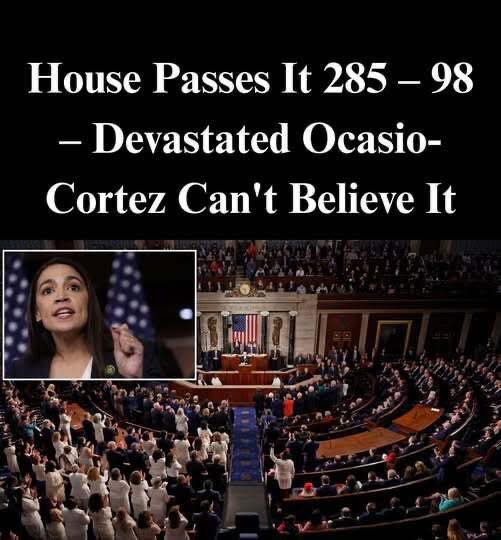
As the newly elected democratic socialist mayor of New York City prepared for his first meeting with President Donald Trump, Capitol Hill erupted in political theater. Congress — in a move as symbolic as it was strategic — passed a resolution formally declaring socialism a “national threat.” The gesture carried no legal weight, but its intent was unmistakable: to draw battle lines in an election year where ideology, not policy, ruled the headlines.
Democrats splintered over the vote. Some defended it as a meaningless stunt; others saw it as an insult to the party’s progressive base. Republicans, meanwhile, celebrated — calling it proof that even the left feared its own radicals. Behind closed doors, Democratic leaders quietly sought distance from Mamdani, unsure whether his meteoric rise was a gift or a liability.
And then came the image no one expected: Donald Trump, smiling beside the self-proclaimed socialist, emerging from the Oval Office calling it a “great hour.”
Inside, while lawmakers waged their ideological war, Mamdani had come to talk about something far less abstract — rent, wages, and survival in America’s most expensive city. He dismissed the congressional vote as “political noise,” insisting that his brand of democratic socialism wasn’t a threat but a promise: to make New York livable again for working families priced out of their own neighborhoods. “This isn’t about overthrowing capitalism,” he said. “It’s about making sure people can afford to live.”
To his critics, it was rhetoric; to his supporters, it was a rallying cry. In a city where billion-dollar condos cast shadows over homeless shelters, Mamdani’s blunt focus on inequality had already turned him into both a hero and a lightning rod.
Trump, for his part, seemed unexpectedly disarmed. Once calling Mamdani “my little communist,” he left their meeting strikingly softened, even admiring. “I’d feel very comfortable living in New York under this guy,” Trump told reporters, pausing his earlier threats to deploy the National Guard amid the city’s protests. For a president who had built his political brand on attacking socialism, the shift was nothing short of astonishing.
In the span of a single day, America witnessed three contradictions unfold at once:
— Congress denounced socialism as a danger to democracy.
— The president praised its most visible champion.
— And New York City — the nation’s beating cultural and financial heart — doubled down on its faith in a man promising to govern by compassion, not ideology.
For Mamdani, the moment was more than political spectacle; it was proof of what he’d been saying all along: that labels divide, but policies reveal character. Whether he can turn that belief into action — in a city and a nation forever caught between capitalism’s excess and socialism’s fear — will define not only his mayoralty, but perhaps the next chapter of America’s political story.