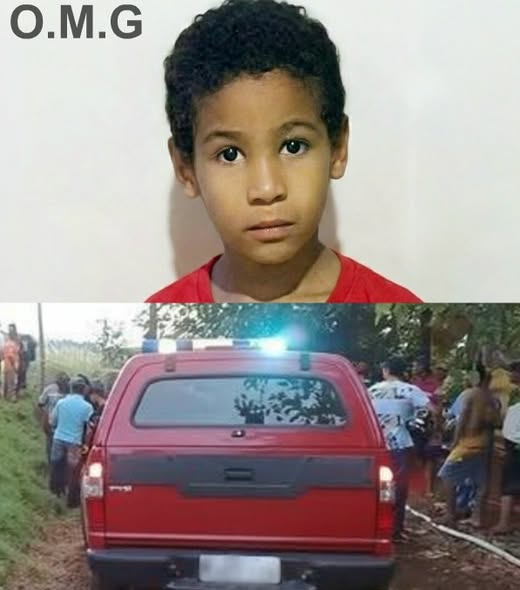
The town had already begun to prepare itself for the worst.
It was the kind of fear that doesn’t arrive all at once—it settles in slowly, like a cold fog creeping through familiar streets. By the second day of Tallyson’s disappearance, it was everywhere. Parents pulled their children closer than usual when they walked past hedges and alleyways. Conversations at grocery stores dropped to whispers. Every passing siren made hearts skip, every notification on a phone felt like a verdict waiting to be delivered.
Search teams had come quickly—officers, volunteers, rescue dogs, drones sweeping over rooftops and tree lines—but nothing. No trace. No clue. It was as if the boy had simply been erased from the world he was only just learning to grow into.
By the fourth morning, exhaustion had replaced panic, but hope had not completely died. That was the strange thing about the town—it refused to give up, even when reason suggested it should.
A construction worker taking a routine route near the edge of town decided to cut behind an old, half-collapsed shed that most people no longer noticed. It was quiet there. Still. Forgotten.
And then he heard it.
A sound so faint he almost dismissed it as the wind—or his imagination. But it came again. Weak. Fragile. Impossible.
When he pushed open the warped door and looked inside, everything changed in an instant.
There, hidden away from sight, was Tallyson.
What followed was chaos—shouts, radios, running footsteps—but none of that mattered compared to the shock of the moment itself. He was alive. Barely. Dehydrated, trembling, covered in dust and fear, but alive. The relief that spread through the town later felt almost unreal, like a collective breath that no one had realized they were holding until it was finally released.
For four endless days, Tallyson’s family had lived in a suspended reality where time no longer followed normal rules. Every knock at the door had felt like a collapse of possibility. Every ringing phone had carried two futures—one they could endure, and one they feared they would never recover from. His parents barely slept. They clung to each other in silence, as if words might break what little strength remained.
Meanwhile, strangers became allies.
People who had never spoken before walked side by side through muddy fields, dense woods, drainage ditches, and forgotten corners of the town. Flashlights swept across darkness long after hope should have faded. Names were called until voices went hoarse. No one wanted to be the person who stopped looking first.
And then—suddenly—everything changed.
The news spread faster than anyone could control: he’s been found.
Relief didn’t arrive gently. It crashed into the town like a wave breaking against stone, overwhelming and unstoppable. People cried in streets, hugged in silence, and stood still just to process what they were hearing. The impossible had become real.
Yet even in the joy, something unsettled lingered.
The image of Tallyson—small, fragile, and shaken beside that abandoned shed—refused to leave the minds of those who saw him first. It raised questions no one could fully answer. How had he ended up there? How had he survived those long hours alone? And perhaps most haunting of all—how had he remained unseen for so long in a place so many had searched so carefully?
Investigators will likely spend weeks trying to piece together the missing hours. Some answers may come. Others may never surface at all.
But for the town, the lesson has already taken shape in quiet ways. Parents hold doors a little tighter when children step outside. Neighbors check in on one another more often. People look twice at places they used to ignore.
Because now they know, with unsettling clarity, that even the smallest towns can hold the biggest unknowns.
And tonight, in a quiet home filled with exhausted relief, Tallyson sleeps safely in his own bed.
For his family, and for the town that refused to stop searching, that is enough.