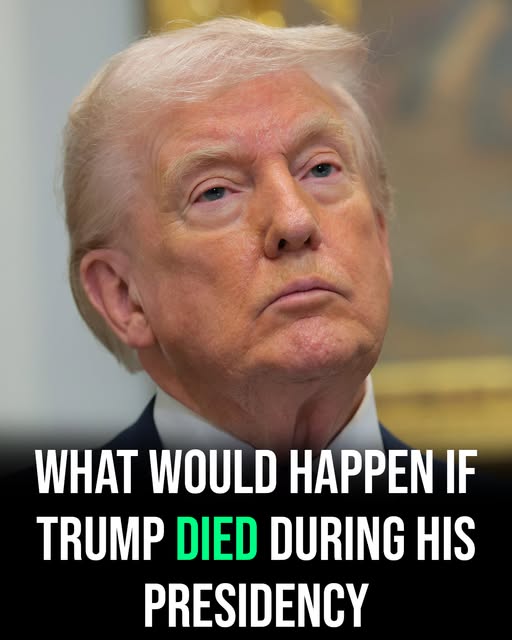
A single announcement could send a shockwave through Washington so powerful it would seem to stop time itself: the president is dead. There would be no warning, no gradual unfolding—just a sudden rupture in the ordinary rhythm of national life. Within moments, the news would spread across every screen, every channel, every conversation. Shock would give way to confusion, and confusion to a quiet, collective unease as millions tried to grasp the reality of what had just happened. In that instant, grief, fear, and uncertainty would collide with the rigid machinery of government. Around the world, allies and adversaries alike would lean in, watching closely for any sign of instability or resolve. Yet even in the face of such emotional upheaval, the question of power—urgent and unavoidable—would already have an answer.
The Constitution leaves no room for hesitation. Authority would transfer immediately and decisively to the vice president, who would be sworn in as swiftly as possible. The ceremony itself, often brief and solemn, would carry enormous weight, serving as a visible signal that continuity endures even in crisis. Inside the White House, the transition would unfold with remarkable speed and precision. Senior staff would secure communications, coordinate with national security agencies, and prepare the new president for the immense responsibilities now resting on their shoulders. Every move, every statement, every image would be carefully calibrated—not only to reassure the American public, but to send a clear message across the globe: the government stands, the system holds.
But while the law provides clarity, it cannot soften the emotional fracture left behind. The loss of a president is not just a political event—it is a human one, layered with symbolism, memory, and meaning. In the days that follow, a state funeral would be organized with meticulous care, blending tradition, ritual, and national identity. Flags would be lowered, processions would move through historic streets, and moments of silence would ripple across the country. Yet this shared experience of mourning would not feel the same to everyone.
In a deeply divided nation, reactions would be as varied as they are intense. For many, the moment would carry a profound sense of loss—an abrupt end to a presidency, a life, and a chapter in history. For others, the dominant emotions might be more complicated: resentment, indifference, or even quiet resistance. Vigils would appear in city squares and small towns alike, while protests might rise alongside them, reflecting unresolved tensions that no single event could erase. The media would amplify every voice, every perspective, turning mourning into a national reckoning that unfolds in real time.
Through it all, the institutions of government would continue to function. Laws would still be enforced, decisions would still be made, and the transfer of power would stand as proof of constitutional resilience. Yet beneath that stability, something deeper would be laid bare. The moment would not just test the strength of the system—it would reveal the fractures within the nation itself, reminding everyone that while governance can endure, unity is far more fragile.