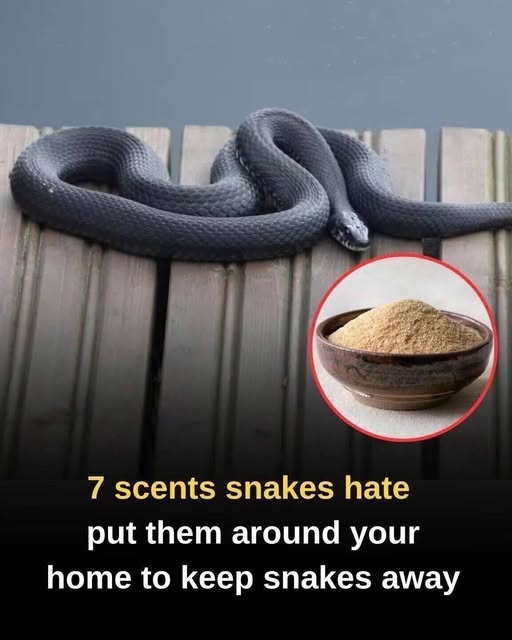
Snakes don’t knock before they arrive. There’s no warning, no polite distance—just a sudden, silent presence where you least expect it. One moment your yard feels safe and familiar, the next it feels uncertain, charged with instinctive fear. It’s not just about danger—it’s about control. And in that moment, most people want the same thing: to keep snakes as far away as possible, without harming them.
That’s where the advice starts pouring in. Ammonia. Garlic. Essential oils. Vinegar. Every remedy comes with a confident claim and a story to back it up. Some people swear these scents drive snakes away instantly. Others dismiss them as nothing more than myths. The truth, as it turns out, sits somewhere in between—less dramatic, but far more practical.
Snakes experience the world very differently from us. They don’t rely heavily on sight or sound; instead, they navigate through chemical signals in their environment, constantly “tasting” the air with their tongues. Because of this, strong or unfamiliar odors can disrupt their perception and make certain areas feel uncomfortable or unsafe. Ammonia, for example, produces harsh fumes that can overwhelm a snake’s sensory system, encouraging it to move elsewhere. But that effect is temporary. The smell fades quickly, and ammonia itself can be harmful if used carelessly, especially around pets or people. It’s not a solution—just a short-lived deterrent.
Essential oils like cinnamon and clove work in a similar way. When sprayed around entry points, garden edges, or pathways, they can overstimulate a snake’s receptors and create an environment it would rather avoid. For a brief time, this can be effective. But nature doesn’t cooperate for long—rain, humidity, and even sunlight break down these scents quickly, reducing their impact almost as soon as they’re applied.
Other commonly suggested options—garlic, onions, vinegar, lemongrass, marigolds, and citronella—each play a subtle role. Some may help mask scent trails, making it harder for snakes to navigate. Others indirectly reduce the presence of prey like rodents and insects, which are often the real reason snakes come close to homes in the first place. But none of these create an invisible barrier. There is no scent strong enough to permanently “block” a snake’s path.
Real, lasting prevention looks less like a quick fix and more like a shift in how the space is managed. Sealing cracks and gaps around foundations removes entry points. Clearing debris, tall grass, and clutter eliminates hiding spots. Managing moisture reduces the habitats that attract prey. And most importantly, controlling food sources makes the area far less appealing overall.
When these practical steps are combined with occasional use of scent deterrents, the result isn’t a forceful eviction—it’s a quiet suggestion. A signal that says, “This isn’t a good place to stay.” And more often than not, that’s enough.
Because in the end, the goal isn’t to fight nature—it’s to coexist with it, wisely and safely. Snakes play a crucial role in the ecosystem, keeping pest populations in check and maintaining balance. Encouraging them to move along, rather than destroying them, respects that balance while still protecting your space.