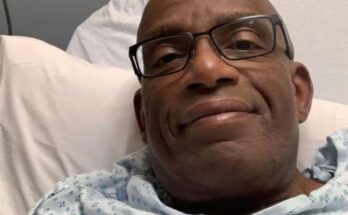
Bill Clinton no longer carries the untouchable aura that once seemed inseparable from his name. The man who once strode through world summits, commanded podiums, and bent rooms to his presence now appears marked by something far more powerful than politics or age—mortality itself. His voice, once sharp with confidence and persuasion, now sometimes catches between breaths. His expression, once animated with relentless energy, seems shadowed by something quieter, heavier. And in a few rare, unguarded moments, he reveals a truth far more unsettling than any political controversy: he came dangerously close to disappearing.
What he describes did not begin as a dramatic collapse or some obvious medical catastrophe. It began, as many life-threatening events do, in ordinary disguise. An infection. Something manageable. Something doctors believed they could control. But beneath that calm surface, something far more dangerous was unfolding. The infection spread silently, slipping beyond its boundaries, entering his bloodstream, turning routine concern into an emergency. What started as treatment became a midnight reckoning. What began as medicine became a negotiation with death itself.
There came a moment, Clinton suggests, when even certainty vanished. Even the specialists at UC Irvine—trained to confront the worst—fell into uneasy silence. And silence in a hospital can be more terrifying than alarms. In those hours, the line separating survival from catastrophe narrowed to something almost invisible. Not weeks. Not days. Hours. His body, indifferent to history, status, or legacy, was fighting a rebellion from within.
And that is what makes his confession so haunting.
This is not the familiar language of political resilience. This is not the polished rhetoric of a statesman crafting a comeback. This is vulnerability stripped bare. A former president, once wrapped in the armor of influence and power, speaking not as a symbol, but as a human being stunned by his own fragility.
Because sepsis does not care who you are.
It does not recognize titles, wealth, or history. It does not pause for fame or negotiate with authority. It moves fast, often invisibly, transforming what appears minor into something catastrophic with ruthless speed. Clinton’s story is unsettling precisely because it reveals how thin the barrier can be between “I’ll be fine” and a fight for survival. An ordinary infection became systemic collapse. A routine medical concern became a crisis requiring teams of specialists, relentless monitoring, and round-the-clock antibiotics to pull him back from the edge.
But what lingers after hearing him speak is not the medical terminology. It is not bloodstream infections, emergency protocols, or the mechanics of sepsis. It is the naked human admission underneath it all: I was vulnerable. I was afraid. I almost didn’t make it.
And somehow, that lands harder than any diagnosis.
When Clinton urges people to “listen to your bodies,” the warning carries unusual weight because it feels free of performance. There is no grandstanding in it. No applause line. No carefully engineered legacy moment. It sounds instead like someone who has looked directly at the possibility of running out of time.
And perhaps that is what makes it so unsettling.
He is not speaking as a man promising another triumphant return. He is speaking as someone bargaining for more days—more time to work, more time to contribute, more time simply to remain present in the lives he loves. It is not ambition driving the message. It is urgency.
And in watching him confront that urgency, we are forced into our own.
Because if a former president—someone surrounded by elite doctors, constant protection, and every advantage power can provide—can be humbled by a fever, a blood test, an overlooked symptom… then what illusion of safety are the rest of us living under?
How many warning signs do we dismiss?
How many symptoms do we postpone dealing with?
How often do we assume there will always be more time?
That may be the deepest discomfort in Clinton’s message. It is not really about him. It is about us.
It forces a brutal question into the open:
If mortality can arrive disguised as something ordinary… what, exactly, are we waiting for?