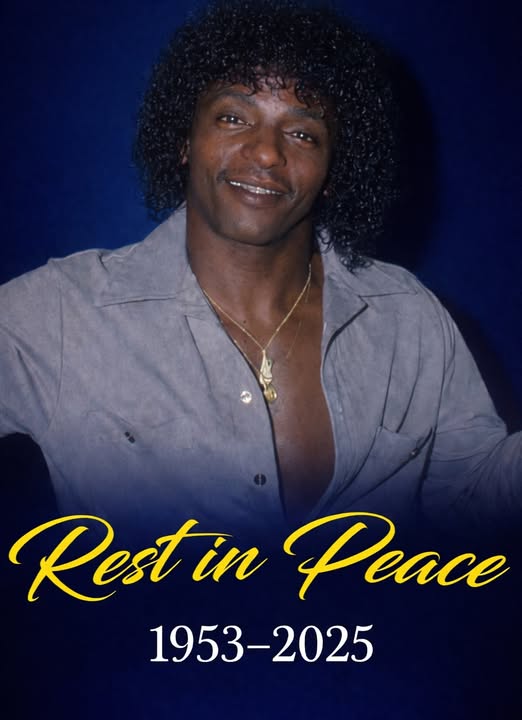
The news arrived softly at first—almost like a whisper that the world wasn’t ready to hear. And yet, it carried the weight of something final. A voice that once filled dance floors, drifted through glowing car radios on warm summer nights, and echoed in family living rooms during moments both ordinary and unforgettable… had fallen silent. For countless fans, the first instinct was disbelief, followed by the same quiet question replayed over and over: how do you say goodbye to a sound that is woven so deeply into the fabric of your memories?
Carl Carlton’s passing at 72 feels less like a firm ending and more like a gentle fading of light at dusk—when the sun is gone, but its warmth still lingers on your skin. Born from the rich musical soil of Detroit, he emerged with a voice shaped by soul, rhythm, and an effortless emotional honesty that could not be manufactured. He didn’t just sing songs—he gave them life, turning melodies into moments people could hold onto forever.
To many, tracks like “Everlasting Love” and “She’s a Bad Mama Jama” were never just chart-toppers. They were experiences. They became the soundtrack of first dances and wedding nights, of birthday celebrations filled with laughter, of long highway drives where the world outside the window blurred into memory and music. His voice carried a kind of joy that felt both personal and universal—intimate enough to feel like it was sung just for you, yet powerful enough to belong to generations.
What made Carl Carlton especially remarkable was not only what he gave the world, but how he carried himself while doing it. In an industry often defined by noise, ego, and spectacle, he chose a quieter path. He let the music speak first. There were no headlines built on controversy, no need for theatrics—only dedication, patience, and a steady devotion to craft. He understood that true artistry does not always shout; sometimes it simply endures.
Even after life brought its challenges, including a stroke in 2019, his influence never faded. Instead, it evolved. His recordings found new listeners in unexpected places—streaming playlists, rediscovered vinyl collections, and nostalgic radio hours where his songs still felt as alive as ever. Each new play became a small revival, a reminder that music does not retire when its creator does.
His passing on December 14, 2025, closes a physical chapter, but it does not close the story. Artists like Carl Carlton do not leave in the traditional sense—they echo. They remain present in the hum of a speaker, in the crackle of a record, in the sudden smile that appears when a familiar intro begins to play.
And so, he continues. Not in silence, but in sound. Not in absence, but in memory. Every time his music returns to the air, so does he—smiling through the rhythm, reminding us all that some voices are never truly gone.