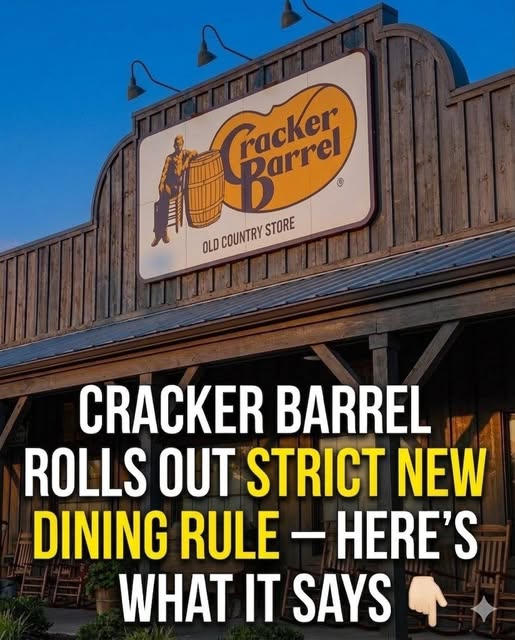
For millions of families across America, a trip to Cracker Barrel was never just about eating—it was a ritual woven into the fabric of childhoods and road trips. It was the gentle creak of a rocking chair on the front porch, the clatter of country-store shelves stocked with everything from candy sticks to miniature cast‑iron skillets, the smell of biscuits baking in the morning air. It was a promise of comfort, a touchstone of familiarity that somehow felt both timeless and distinctly American.
Then, quietly, almost imperceptibly at first, the company began to change. The logo—so instantly recognizable—was redrawn with cleaner lines. Interiors were refreshed with lighter colors, sleeker surfaces, and a more contemporary flow. Even the way tables were arranged and menus presented hinted at a new direction. For loyal patrons, it was jarring. Something intangible had shifted. The warmth of the old-time charm seemed just out of reach, a faint echo of itself. Social media erupted. Online forums brimmed with frustration. Memes circulated: the Cracker Barrel “you loved is gone,” they said. Critics asked pointedly: had this beloved roadside icon traded nostalgia for modernity, one design tweak at a time?
Inside the company, the story was far more complex than outrage could capture. Memos circulated about brand consistency, design debates stretched across multiple offices, and travel guidelines sparked their own quiet controversies. Employees were encouraged—sometimes too strongly—to experience Cracker Barrel from the guest perspective, including dining at company locations during trips. The intention was simple: understand the customer experience firsthand. But in execution, it raised questions about reimbursement practices and internal culture, shining a spotlight on the fine line between guidance and mandate.
Amid the noise and scrutiny, executives began walking a delicate tightrope. They restored familiar elements beloved by longtime customers—rustic accents, signature displays, the comforting clutter of the country store—while quietly pursuing behind-the-scenes upgrades aimed at efficiency, safety, and long-term survival. Communications emphasized transparency and flexibility, clarifying that travel and dining suggestions were guidelines, not orders. Slowly, the company sent a message: evolution didn’t have to erase history, and accountability could coexist with progress.
The Cracker Barrel story, in its quiet tension between tradition and transformation, illustrates a broader truth about cultural icons. They are not static relics. They live in memory, expectation, and emotion—and yet, they must evolve to survive. The challenge is striking the balance: too little change, and they risk stagnation; too much, and they risk alienating the very people who gave them meaning. For Cracker Barrel, that balance meant listening as carefully as they designed, honoring the past even while stepping into the future. And in that careful dance lies the secret to keeping an American institution not only alive but beloved.