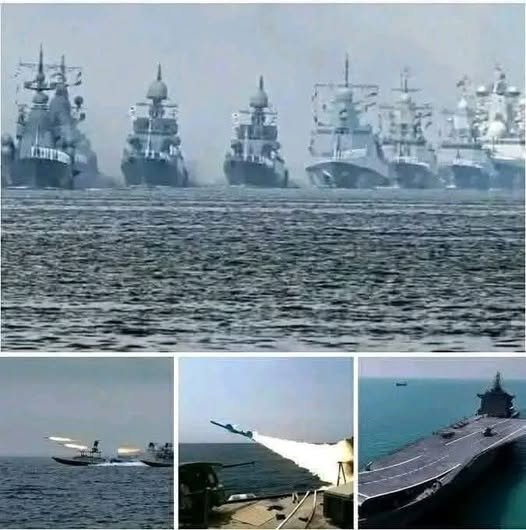
Rumors move faster than facts in the digital age. ⚠️ One viral post sparks another, headlines grow more dramatic by the minute, and suddenly social feeds are filled with frightening declarations: “America has entered a new war.” Fear spreads quickly—along with anger, confusion, and speculation about what might come next. But beneath the noise of trending hashtags and breathless commentary, the truth is far more complex and far less apocalyptic.
What’s unfolding on the global stage is not a sudden plunge into a new world war, but a tense and delicate balancing act. Behind the alarming headlines lies a quieter reality—one shaped by cautious diplomacy, limited military maneuvers, and high-stakes negotiations that often happen far from cameras and social media timelines. The real danger right now may not simply be conflict abroad; it’s the tidal wave of misinformation that turns uncertainty into panic. 🌍
Look closely at the current flashpoints, and the picture becomes clearer. In the ongoing war involving Ukraine and Russia, the United States has carefully avoided direct battlefield involvement. Instead, Washington’s role has been channeled through military aid packages, economic sanctions, intelligence sharing, and diplomatic pressure. These actions are significant—but they are fundamentally different from deploying American combat forces into the conflict itself.
At the same time, diplomatic channels remain very much alive. Quiet discussions have taken place in the United Arab Emirates involving representatives connected to both Russia and Ukraine. Meanwhile, indirect negotiations concerning regional tensions with Iran have occurred in Oman. These talks rarely dominate headlines, yet they reveal something crucial: even bitter rivals are still choosing negotiation rooms and conference tables over trenches and tanks. 🕊️
Modern conflict rarely begins with the thunderclap of an official declaration of war. Instead, it tends to emerge gradually through shadowy steps—limited military strikes, cyber operations, proxy conflicts fought through allied forces, and political signaling designed as much for domestic audiences as foreign rivals. These gray-zone tactics blur the lines between peace and war, creating an atmosphere where escalation is possible but not inevitable.
That ambiguity makes the current moment especially vulnerable to distortion. Online speculation can quickly transform complex geopolitical maneuvering into dramatic claims of imminent global catastrophe. A single misinterpreted military movement or leaked statement can be amplified across millions of screens within minutes, reshaping public perception long before verified facts arrive. 📱
Understanding the difference between escalation and outright war therefore matters enormously. Escalation refers to rising tensions, stronger rhetoric, or limited military actions designed to pressure opponents without triggering full-scale conflict. War, by contrast, involves sustained, declared hostilities between nations. The gap between those two states may appear narrow in headlines—but in reality, it represents an enormous political, legal, and military threshold.
Right now, world leaders are operating within that tense space between pressure and catastrophe. Governments are sending signals, testing boundaries, and attempting to maintain leverage without igniting something that could spiral beyond control. It’s a dangerous chess game played on a global board, where every move carries consequences. ♟️
For ordinary people watching events unfold through their phones and televisions, the challenge is separating signal from noise. In a hyperconnected world, information spreads instantly—but accuracy often lags behind speed. Panic can travel the globe in seconds, while careful analysis takes time to catch up.
In that environment, clarity becomes a form of security. Understanding the difference between rumor and reality, between rising tensions and declared war, helps prevent fear from becoming the dominant force shaping public perception. The situation may indeed be serious—but seriousness is not the same as inevitability.
The world is not standing on the brink of a new war simply because social media says so. What we are witnessing instead is a fragile moment of geopolitical tension—one where diplomacy, restraint, and careful strategy are still actively working behind the scenes. And sometimes, the most important battles are the ones fought quietly across negotiating tables rather than loudly across battlefields. 🌐