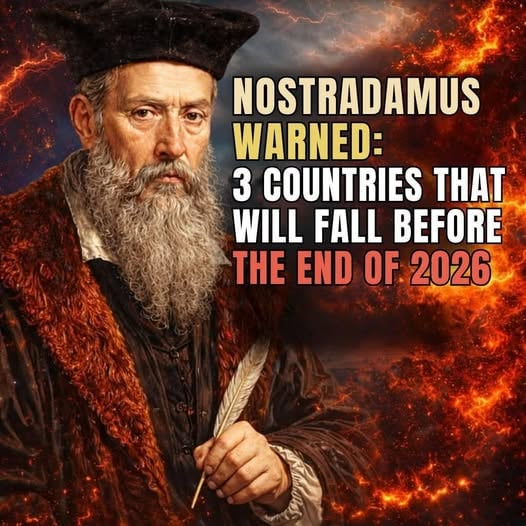
The warnings feel uncomfortably close, like shadows creeping over a familiar landscape. As global tensions intensify, old powers wobble under pressure, and long-standing alliances strain, the world seems to turn back to the words of a 16th‑century seer with renewed unease. Nostradamus, the enigmatic French astrologer whose quatrains have both fascinated and unnerved readers for centuries, is suddenly everywhere in conversation. His verses, long dismissed as vague curiosities, are being dissected with fresh intensity: a wounded eagle, a trapped bear, an aging lion—each facing what some interpret as a painful reckoning. Are these prescient glimpses of future calamities, or merely shadows cast by our own contemporary anxieties, projected backward onto cryptic rhymes written in a different era?
The enduring allure of Nostradamus lies not in the mechanical accuracy of his predictions, but in the possibilities they evoke. His veiled imagery—a weakened eagle, a cornered bear, a fading lion—strikes a chord precisely because it mirrors the fears already simmering beneath the surface of our modern world. In the United States, whispers of self-doubt and leadership crises stir unease. In Russia, isolation and ongoing conflict weigh heavily, leaving fractures visible to all. In Britain, questions of identity and purpose reverberate through political discourse and public sentiment alike. These quatrains feel haunting not because they dictate an inevitable future, but because they echo patterns that history has replayed over and over again: empires that falter, rulers who stumble, societies forced to confront the consequences of pride and miscalculation.
Yet Nostradamus’ verses ultimately reveal something more profound than prophecy—they act as mirrors, reflecting the fears and uncertainties of humanity itself. They remind us that power is never absolute, that crisis is never final, and that even the strongest nations are subject to ebb and flow. Empires rise, hesitate, and change course; alliances fracture, dissolve, and reform; ordinary people adapt, innovate, and endure in ways even the most perceptive prophet could not fully foresee. In this light, the real lesson is not surrender to fatalism, nor obsession with doom, but awareness—an invitation to recognize patterns, confront anxieties, and make choices in the face of uncertainty. Between decline and renewal, despair and resilience, history offers no guarantees, only opportunities for action. And perhaps it is in those moments of uncertainty that humanity’s true potential emerges, more vividly than any prediction could ever capture.