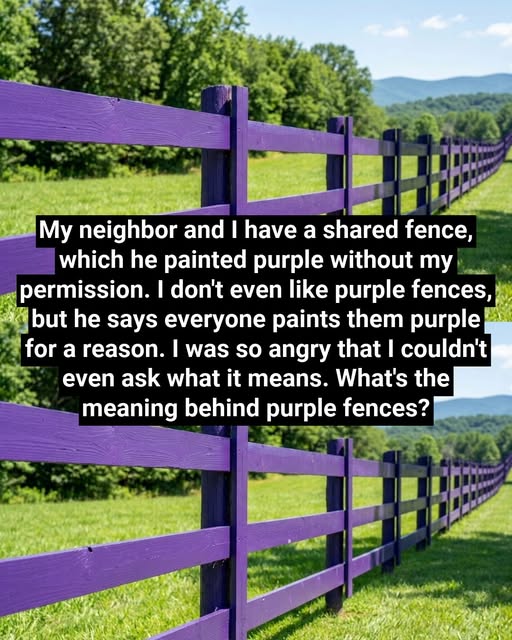
Have you ever been walking down a quiet country road and noticed something strange—thin streaks of purple paint glowing faintly against a fence post or tree trunk? For a moment, it might feel a little unsettling. Not decorative. Not playful. Just… wrong. Almost like the land itself is trying to send a message.
And in many parts of rural America, it is.
What looks like an odd splash of color is actually a silent warning, one that carries the force of law in several U.S. states. No loud signs. No angry voices. No barking dogs or locked gates. Just a stripe of purple paint—quiet, deliberate, and unmistakably clear to those who know what it means: do not cross.
Most people assume a purple fence or painted tree is simply a quirky choice by a landowner, maybe someone with a fondness for unusual colors. But the truth is far more serious. Across parts of the United States, what’s known as the “purple paint law” allows property owners to mark the boundaries of their land with vertical purple stripes instead of traditional “No Trespassing” signs.
Those markings follow specific rules. The stripes are typically about one inch wide and eight inches long, placed three to five feet above the ground, and repeated at regular intervals—often every 100 feet along fences, trees, or posts. To someone unfamiliar with the system, they might seem random. But to hunters, hikers, and rural residents, they function exactly like a posted warning sign.
Cross that line, and you’re no longer an innocent wanderer admiring the scenery. Legally speaking, you’re trespassing.
The idea behind the law is surprisingly practical. Traditional signs can fall down, rust, fade in the sun, or get blown away by storms. Some are torn down by vandals or simply disappear over time. Purple paint, however, is far more durable. It doesn’t flap in the wind, and it’s much harder to remove. The color was also chosen for a reason: purple stands out clearly in natural environments and is easier for people with certain types of color blindness to recognize.
But perhaps the most striking thing about these purple marks is their silence.
There’s no dramatic warning. No threatening language. No flashing lights or loud alarms. Just a quiet stripe on wood or bark, patiently waiting for you to notice. It’s a message delivered without confrontation: this land belongs to someone, and they want their privacy respected.
However, the system isn’t universal. The purple paint law doesn’t apply everywhere. Some states have embraced it as a practical alternative to posted signs, while others still rely strictly on traditional trespassing notices. Because of that, landowners must always check their local regulations before relying on paint alone to mark their property boundaries.
For travelers, hikers, and curious explorers, the lesson is simple but important. If you ever spot a vertical streak of purple on a fence post, tree, or gate while wandering through the countryside, pause for a moment. That splash of color might look harmless—but it’s actually a clear legal signal.
And in many places, it’s the quietest warning you’ll ever receive.
Turn back while it’s still just paint. 🎨🚧🌲