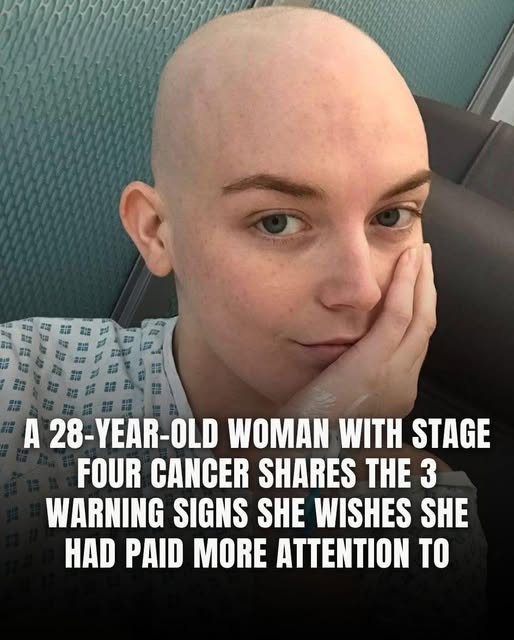
Exhaustion was consuming her—deep, relentless, bone-deep exhaustion that no weekend lie-in, no spa day, no pep talk from a friend could touch. This wasn’t the ordinary fatigue of a busy schedule; this was the kind that gnawed at her every cell while the world around her insisted she was “just busy” or “doing amazing.” For eighteen months, Georgie Swallow’s body had been whispering, then pleading: night sweats that left her drenched and shivering, raw, bleeding skin from an itch that no cream or salve could soothe, a cough and cold that lingered with stubborn persistence. Her pleas were subtle, almost imperceptible—but the world kept talking over them.
Then, one morning, a peach-sized lump appeared in her neck. It was impossible to ignore. She walked into the clinic expecting a routine prescription, a simple course of antibiotics, and a pat on the shoulder. She walked out clutching a diagnosis that would fracture her life into before and after: stage 4 Hodgkin lymphoma. In an instant, the future she had imagined—the career milestones, late-night laughter with friends, perhaps children of her own—shifted into a jagged landscape of hospitals, infusions, and uncertainty.
Chemotherapy did its brutal work. It attacked the cancer, yes, but it also attacked her body in ways she had never anticipated. Her ovaries shut down, hurling her into premature menopause at just twenty-eight, stripping away a future she hadn’t even begun to plan. While friends debated baby names over brunch “someday,” Georgie grieved silently for the children she would never hold, and for a body that now felt decades older than her years. Every mirror became a reminder that survival came with a price tag she hadn’t signed up for.
Now, at thirty-two, Georgie has transformed her pain into purpose. She refuses to let her silence—or the dismissive shrug of doctors and peers—swallow anyone else. She speaks for the younger version of herself, the one who lay awake at night clawing at her own legs, doubting herself, asking, “Am I overreacting?” Her message is both urgent and piercing: persistent symptoms are not exaggeration, they are data. You are never wasting anyone’s time by demanding answers. You are not “too young” to be seriously ill.
Her survival is more than a medical victory—it is a declaration. Her story is a flare in the darkness, lighting the path for anyone who has been brushed off, minimized, or ignored. Georgie’s voice, honed by pain and courage, reminds us all that listening to your body is not optional. It is necessary. And in that clarity, there is hope: hope that no one else has to suffer in silence, hope that persistence is strength, and hope that even in the shadow of illness, life—fragile, complicated, and fiercely alive—can still be claimed.