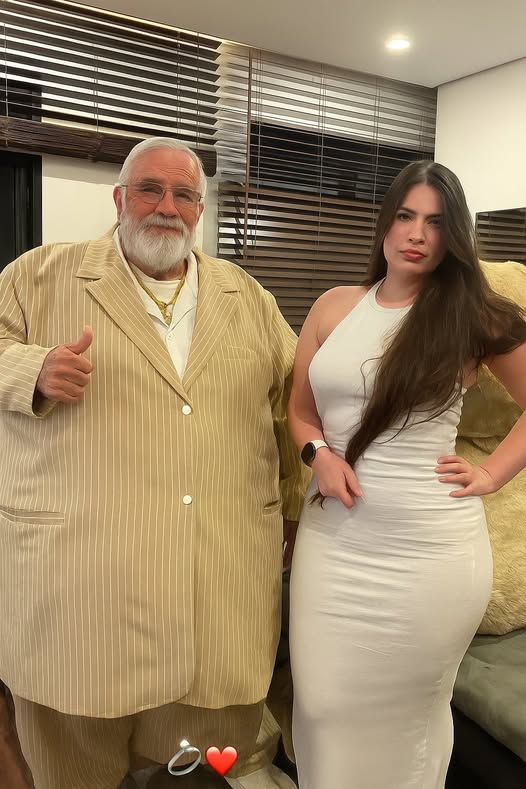
She shattered the fantasy everyone had been quietly, and sometimes not so quietly, invested in. The private jets that cut through clouds like declarations of arrival. The couture gowns stitched with invisible labor and visible status. The diamond-hard smiles carefully practiced in flashes of cameras that never blinked. She walked through all of it as if it were smoke—present, dazzling, and ultimately insubstantial.
For a while, she was exactly what the world expected her to become. Another headline. Another upgrade story. Another proof that proximity to wealth was the same thing as having arrived. They said she had finally “made it,” as if a man’s bank balance had somehow rewritten her worth, repackaged her identity, and elevated her humanity into something newly validated. People applauded what they thought they understood: transformation through luxury, legitimacy through association, happiness as a side effect of excess.
But inside the marble corridors and behind the chauffeured silence, something began to shift in ways no camera could capture. It didn’t happen dramatically. There was no single breaking point, no cinematic confrontation. It was quieter than that—almost uncomfortable in its simplicity. She started noticing the difference between what glittered and what lasted.
It was in the way conversations stopped being about appearances and started being about her thoughts. In the way he would pause an entire meeting just to take her call, not out of obligation, but attention. In the way he asked, “Are you really okay?” and then did something rare in her world—he waited. Not for the polished answer people usually accept, but for the truth that takes longer to say.
The world outside continued building its narrative. It saw price tags, branded silhouettes, curated vacations, and assumed it understood the entire story. But she was beginning to recognize a different kind of wealth—one that didn’t reflect in mirrors or show up in photographs. It lived in time given freely. In silence that didn’t feel empty. In presence that didn’t require performance.
And so she did something that looked, from the outside, almost unthinkable. A quiet rebellion that didn’t announce itself with drama or defiance. She stopped performing the role that had been written for her by strangers. She let the diamonds sit unworn in drawers that once defined her days. She chose evenings without spectacle, where the only luxury present was not something you could buy, but something you could feel—time that wasn’t scheduled, attention that wasn’t divided, moments that didn’t need to be posted to exist.
The internet wanted a fairy tale built on money. On transformation measured in handbags and skylines. On love as a transaction that proved success. But she was writing something else entirely, even if no one recognized it yet. A story where presence mattered more than performance. Where being seen mattered more than being displayed.
And in stepping away from the life everyone assumed she would proudly flaunt, she exposed something far more uncomfortable than scandal or rebellion. She revealed a question most people avoid asking too closely: if the relationship is empty, then no amount of luxury can make it full. It can only make the silence louder, more expensive, and far harder to ignore.