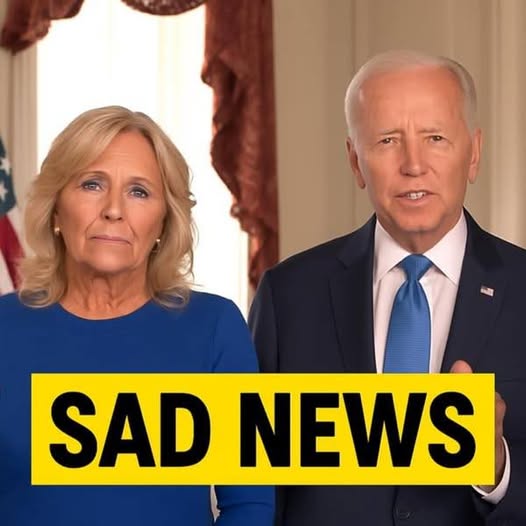
The silence inside the Oval Office wasn’t ordinary—it was heavy, almost suffocating, as if the entire nation had paused mid-breath, waiting for words that everyone sensed would change everything. When Joe Biden finally spoke, his voice didn’t carry the usual steadiness of a seasoned leader. It faltered, cracked under the weight of the moment—and with that single fracture, the 2024 race seemed to splinter before the world’s eyes.
Allies watched in stunned grief, some openly weeping at the realization that a defining chapter was ending. Critics, meanwhile, moved swiftly, dissecting every syllable, every pause. But beyond the immediate reactions, something deeper shifted. It wasn’t just a campaign unraveling—it was history tilting, quietly but unmistakably. Behind the cameras, away from the polished stagecraft of politics, his family bore witness to it all: the closing of a decades-long pursuit of public service at its highest level, and the sudden birth of a political earthquake that would ripple far beyond that room.
When Joe Biden looked directly into the camera on July 24, 2024, the moment carried a gravity that transcended strategy or polling. This was not merely a withdrawal; it was a reckoning. Framed as a sacrifice for democracy itself, his decision reflected a man confronting his own limits in real time—choosing legacy over endurance, responsibility over ambition. There was no shield of political theater left. The emotion in his voice, the quiet presence of those closest to him, and his candid acknowledgment of age and strain stripped away the usual armor, revealing something raw, vulnerable, and almost unsettlingly human.
Yet even in retreat, there was intention. By throwing his full support behind Kamala Harris, Biden sought to transform a personal ending into a collective beginning. His departure didn’t just leave a gap—it carved out a path. It forced his party, and the nation, to confront urgent questions about leadership, resilience, and the future in an era defined by uncertainty and division.
In the weeks that followed, the tone of his presidency subtly shifted. There was a quieter intensity to his actions, a sense of urgency beneath the surface. Every decision, every appearance seemed to carry the unspoken understanding that time was now finite. His final months in office became something more than governance—they became a test. A test of whether his sacrifice would resonate, whether unity could emerge from upheaval, and whether the country itself was ready to turn the page he had just, so deliberately, closed.