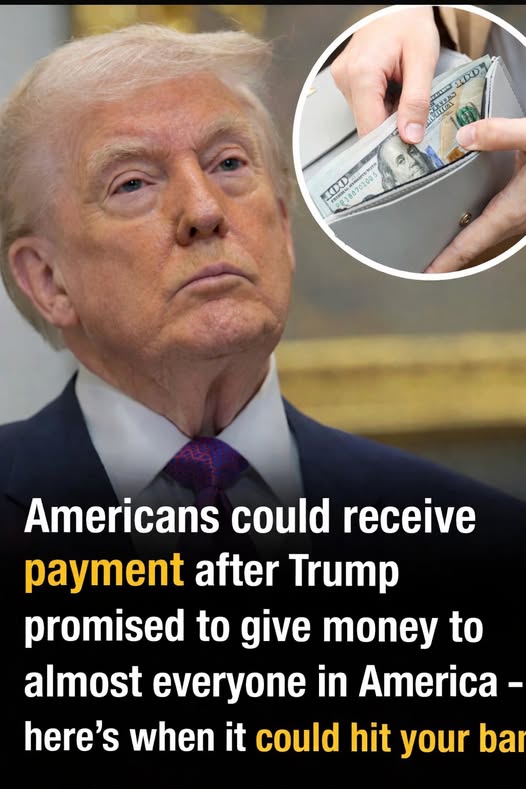
The number—$1,745—didn’t come out of nowhere. It emerged from a quiet calculation, one that tried to put a price on something most families feel but rarely see itemized: the hidden cost of tariffs. Higher prices at the checkout line, steeper bills for everyday goods, the slow, almost invisible drain on household budgets—add it all up, and economists estimate that many Americans effectively paid that much out of pocket.
For Donald Trump and his allies, that figure became something more than a statistic. It became a promise. A symbol. They framed it as money that rightfully belonged back in the hands of ordinary Americans—a kind of “refund” for years of economic pressure. The idea carried a certain political electricity: take the pain people had already absorbed and transform it into a direct payment, a tangible acknowledgment that those costs mattered.
But the plan didn’t survive intact.
In a move that reshaped the entire conversation, the Supreme Court of the United States stepped in, blocking the use of tariff revenue as a direct funding source for those payments. What once looked like a straightforward—if controversial—proposal suddenly unraveled. The legal foundation cracked, and with it, the simplicity of the original idea. Without that revenue stream, the “refund” lost its mechanism, forcing Republicans back to the drawing board.
Now, any path forward looks far more complicated.
Instead of a targeted payout tied neatly to tariffs, a new plan would almost certainly have to move through Congress like any other federal spending bill. And that changes everything. What was once pitched as a focused economic remedy is now poised to become a full-scale political battle—debated, amended, delayed, and potentially diluted in the process. In today’s climate, few issues pass through Washington untouched by partisanship, and a proposal like this would likely ignite fierce disagreement over cost, fairness, and precedent.
Trump has hinted at mid-2026 as a possible moment when back-payments could begin, keeping the idea alive in speeches and on the campaign trail. But behind that timeline lies a long list of unresolved questions. There is no finalized legislation. No agreed-upon funding source. No clear legal framework that could withstand further challenges. What exists, for now, is more vision than policy—more signal than substance.
And so the $1,745 lingers in a strange space between promise and uncertainty.
For many Americans, the reality hasn’t changed: prices remain high, budgets remain tight, and the effects of those earlier policies are still felt in everyday life. The notion of a refund offers a flicker of hope, a sense that relief might one day arrive. But hope alone doesn’t pay bills.
Until lawmakers find a viable path—one that satisfies both legal scrutiny and political reality—the idea remains suspended, unresolved. A number people can point to. A promise people can debate. And a question that continues to hang in the air, unanswered and increasingly urgent:
Will the money ever actually come?