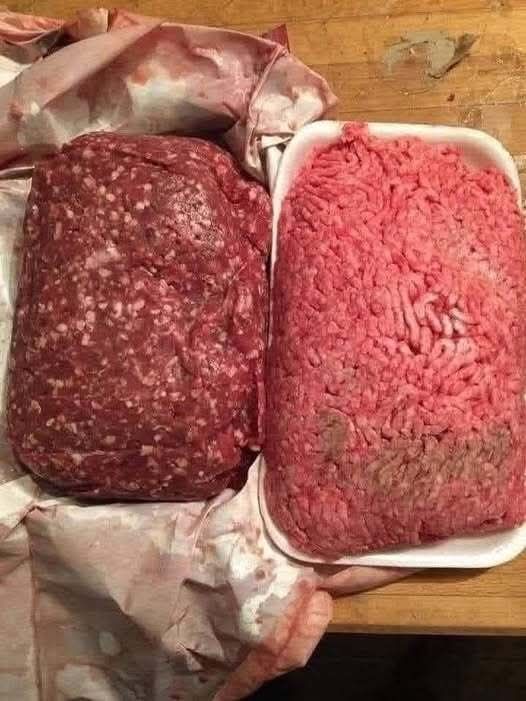
The steak on your plate may not be as simple—or as innocent—as it looks.
To most people, two cuts of beef can appear nearly identical under the warm lights of a restaurant or the plastic wrap of a supermarket tray. Same rich red color. Same promise of tenderness. Same expectation of a satisfying meal. But behind that visual similarity lies a hidden divide—two completely different stories of how that meat came to exist, and what kind of life was lived to produce it.
One story begins in open pastures, where cattle move freely across grasslands, grazing at their own pace under changing skies. These animals are raised in systems that prioritize space, natural feeding behavior, and slower growth. Their diet comes primarily from grass and forage, and their lives unfold with room to walk, graze, and interact in a more natural environment. Over time, that lifestyle leaves its mark. The meat tends to develop a richer, deeper flavor profile—slightly earthy, more complex, sometimes described as “beefier” in the most literal sense of the word. The texture is often firmer, with marbling that reflects steady growth rather than rapid fattening. For many people, this is not just food—it feels like a return to something more traditional, closer to how beef existed before industrial systems reshaped agriculture.
The other story is very different, built for efficiency, volume, and consistency. In large-scale feedlot operations, cattle are often moved from pasture to confined spaces where their diet shifts heavily toward grain-based feed designed to accelerate weight gain. Movement is limited, growth is carefully controlled, and production is optimized to deliver uniform cuts of meat to meet global demand. The result is beef that is predictable—tender, mild in flavor, and widely accessible at a lower cost. It is engineered not for uniqueness, but for standardization, ensuring that every package on the shelf feels familiar no matter where or when you buy it.
This difference in upbringing doesn’t just affect taste—it also shapes nutrition and broader impact. Beef from pasture-raised systems is often associated with a different fat composition, including higher levels of certain beneficial fats, and is frequently chosen by those who value more natural feeding practices. Meanwhile, grain-finished beef is typically more consistent in fat content and flavor, making it a dependable option for everyday cooking and mass distribution.
But beyond taste and nutrition, there is a deeper layer that many consumers think about more carefully today: ethics and environment. How an animal is raised raises questions about animal welfare, land use, and sustainability. Some see pasture-based systems as more aligned with natural living conditions, while others point out that large-scale production helps feed millions efficiently and affordably.
In the end, there is no single answer to which beef is “better.” The real question is what matters more to you when you sit down at the table. Is it depth of flavor and origin, or affordability and consistency? Is it the story behind the meat, or the simplicity of the meal in front of you?
Because every steak carries more than protein and fat—it carries a history. And whether you realize it or not, your choice is part of that story.